Sciatica: Recognizing Radiating Leg Pain and Understanding Treatment Options
Sciatica causes pain that travels from the lower back into the leg when a nerve root is irritated or compressed. Premier Injury Specialists evaluates the symptoms, checks for serious warning signs, and explains treatment options based on the cause, pain severity, nerve involvement, and effect on daily function.
Request an EstimateWhat Does Sciatica Feel Like?
Sciatica feels like pain, tingling, numbness, or weakness that travels from the lower back or buttock into the leg.
The sciatic nerve connects nerve roots in the lumbar spine with the leg. Irritation of a lumbar nerve root can create nerve pain that feels sharp, burning, electric, or aching.
Radiating leg pain may travel along one side of the body. Pain with movement can occur when sitting, standing, walking, bending, or changing position.
Common Signs and Symptoms of Sciatica
Sciatica symptoms can affect the lower back, buttock, leg, and foot. We look at the full symptom pattern because the location and type of pain can point toward the irritated nerve root.
Symptoms can vary based on the affected nerve root. We also check whether symptoms are stable, improving, or becoming more severe.
What Causes Sciatica?
Sciatica develops when a lumbar nerve root becomes irritated or compressed by a spine or disc problem.
The lumbar spine supports the lower back and allows the body to bend and rotate. A disc problem, joint change, or narrowing around the nerves can cause nerve compression.
When nerve irritation continues, pain may travel from the lower back or buttock into the leg. Our team connects the symptom pattern with the likely source during a medical evaluation.
Common Conditions That Can Trigger Sciatica
Several spine conditions can trigger sciatica, and each condition may call for a different treatment plan.
- Herniated disc, when disc material moves outside its normal space
- Bone spur growth that narrows the space near a nerve
- Spinal stenosis, which reduces room for the spinal nerves
- Spondylolisthesis, when one spinal bone shifts in relation to another
We consider the suspected cause, the level of nerve involvement, and the effect on movement before discussing care.
Can a Herniated Disc Cause Sciatica?
Yes, a herniated disc can cause sciatica when displaced disc material irritates or compresses a lumbar nerve root.
A herniated disc may cause lumbar radiculopathy, which is nerve pain that travels from the spine into an arm or leg. In the lower back, the symptoms often follow the path of the sciatic nerve.
Our team checks whether the symptoms match the suspected disc level. We also look for changes in strength, reflexes, and sensation that may show nerve root irritation.
How We Evaluate Radiating Leg Pain
Our medical evaluation identifies the symptom pattern, checks nerve function, and looks for warning signs that need prompt care.
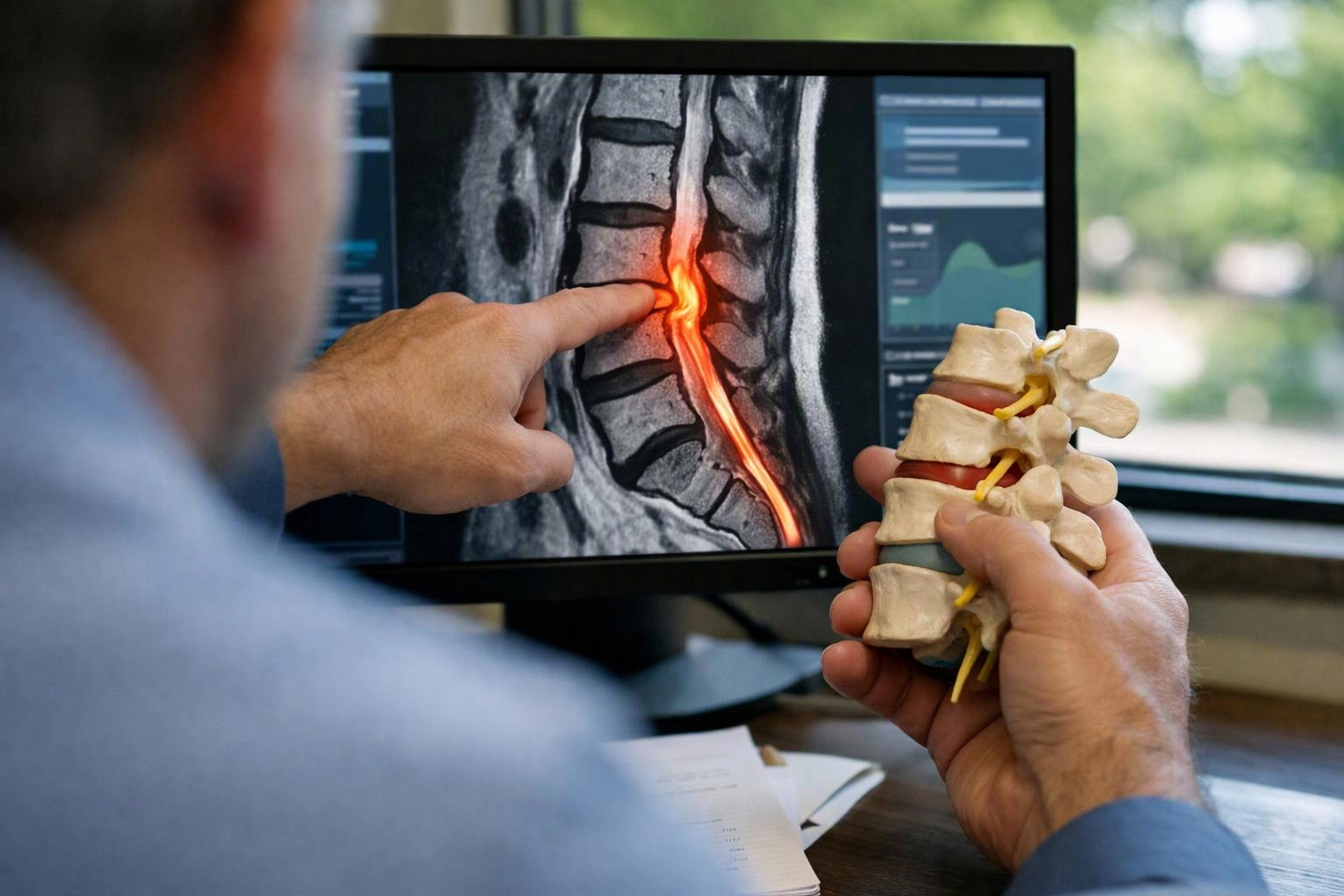
Imaging doesn't always explain every pain symptom. We use imaging alongside the examination and your reported symptoms.
When Should You See a Doctor for Sciatica?
You should seek medical care when sciatica is severe, persistent, worsening, or linked with weakness, loss of sensation, or bowel or bladder changes.
Progressive weakness, major loss of sensation, or new bowel or bladder changes can signal serious nerve compression. Cauda equina syndrome is an urgent condition that needs immediate medical attention.
We also recommend an evaluation for persistent pain that limits sleep, walking, work, or normal daily activities. Early assessment helps separate common radiating pain from neurological warning signs.
Sciatica Treatment Options
Sciatica treatment depends on the cause, symptom severity, nerve involvement, and response to care. We explain the benefits and limits of each option before building a plan.
| Treatment option | When it may help | What it involves | Key trade-offs |
|---|---|---|---|
| Conservative treatment | Milder symptoms or symptoms without progressive weakness | Activity guidance, movement changes, and symptom monitoring | Results depend on the cause and treatment response |
| Physical therapy | Reduced strength, movement limits, or recurring symptoms | Guided exercises and movement training | Exercises must match the cause and current symptoms |
| Medication | Pain or inflammation that limits normal activity | Medication selected around symptoms and health history | Side effects and health risks must be reviewed |
| Epidural steroid injection | Nerve-root inflammation linked to radiating pain | Medicine delivered near the affected spinal nerve | Relief varies and may not correct the underlying disc or spine problem |
| Spinal surgery | Serious nerve compression or symptoms that don't improve with appropriate care | A surgical procedure to address the structural cause | Surgery has recovery needs and procedure-specific risks |
Our Sciatica Treatment approach starts with the cause and the level of nerve involvement. We adjust the plan when symptoms or function change.
How Treatment Choices Depend on the Cause
Treatment choices depend on pain severity, nerve involvement, functional limits, and treatment response.
A disc injury may need a different plan from stenosis-related sciatica. We also consider whether weakness is progressing and whether symptoms improve with conservative care.
Lumbar radiculopathy treatment works best when the plan addresses both pain control and the suspected source. We explain practical trade-offs so you can make an informed decision.
How to Reduce the Risk of Recurrent Sciatica
You can reduce recurrent sciatica risk by staying active, using safe movement habits, and following the treatment plan for the underlying cause.
Spinal health often depends on regular movement, good posture, and safe lifting technique. Core strength can also support the lumbar spine during daily activities.
Our team helps you understand which habits fit your symptoms and physical needs. Prevention steps should support recovery without increasing nerve irritation.
Practical Prevention Steps
Practical prevention steps focus on steady movement and safer body mechanics.
- Regular movement that avoids long periods in one position
- Posture changes that reduce strain during sitting and standing
- Body mechanics that keep lifting close to the body
- Weight management that supports overall spinal health
- Prescribed exercises that build strength and improve movement control
Stop an activity that sharply increases radiating pain, numbness, or weakness. We can help identify safer ways to stay active.
How Premier Injury Specialists Helps With Sciatica and Lumbar Radiculopathy
Premier Injury Specialists connects the symptom pattern with the likely pain source and explains appropriate treatment options for sciatica, lumbar radiculopathy, or a herniated disc.
Our pain management physician reviews your history, performs a neurological examination, and considers imaging when it supports the evaluation. We then discuss conservative care, physical therapy, medication, epidural steroid injection, or spinal surgery referral when appropriate.
Our goal is a clear treatment plan that matches your symptoms, function, and medical needs. Contact us to arrange an evaluation and discuss your options.
Questions About Sciatica Symptoms and Treatment
Is sciatica always caused by a herniated disc?
No, sciatica isn't always caused by a herniated disc. Spinal stenosis, bone spurs, spondylolisthesis, and other causes of nerve compression can also trigger symptoms. Premier Injury Specialists evaluates the symptom pattern and likely source before discussing treatment.
Can sciatica cause numbness or weakness in the leg?
Yes, sciatica can cause numbness or weakness when nerve compression affects nerve signals to the leg. New or worsening weakness needs medical evaluation, especially when it affects walking or foot control.
Can sciatica affect both legs?
Yes, sciatica can affect both legs when both nerve roots are irritated or compressed. Symptoms in both legs, especially with bowel or bladder changes or major loss of sensation, need urgent medical attention.
What happens if sciatica is left untreated?
Untreated sciatica can continue to limit movement, sleep, work, and daily activities. Ongoing nerve compression can also cause worsening numbness or weakness, so persistent or changing symptoms deserve a medical evaluation.
Related Resources
How Pain Specialists Evaluate Symptoms: Exams, Imaging, and Nerve Tests
Compared ToSciatica Treatment Options: When to Discuss an Epidural Injection
Compared ToPain Management Physician vs. Orthopedic Doctor: Choosing Where to Start
What Goes With ItCombining Pain Procedures with Physical Therapy and Other Care