Sciatica Treatment Options: When to Discuss an Epidural Injection
Sciatica treatment is compared with epidural steroid injection and noninjection treatment options. Premier Injury Specialists reviews your symptoms, diagnosis, health history, and care goals to decide whether an epidural steroid injection may help nerve inflammation or whether conservative treatment better fits your needs.
Request an EstimateCan an Epidural Steroid Injection Treat Sciatica?
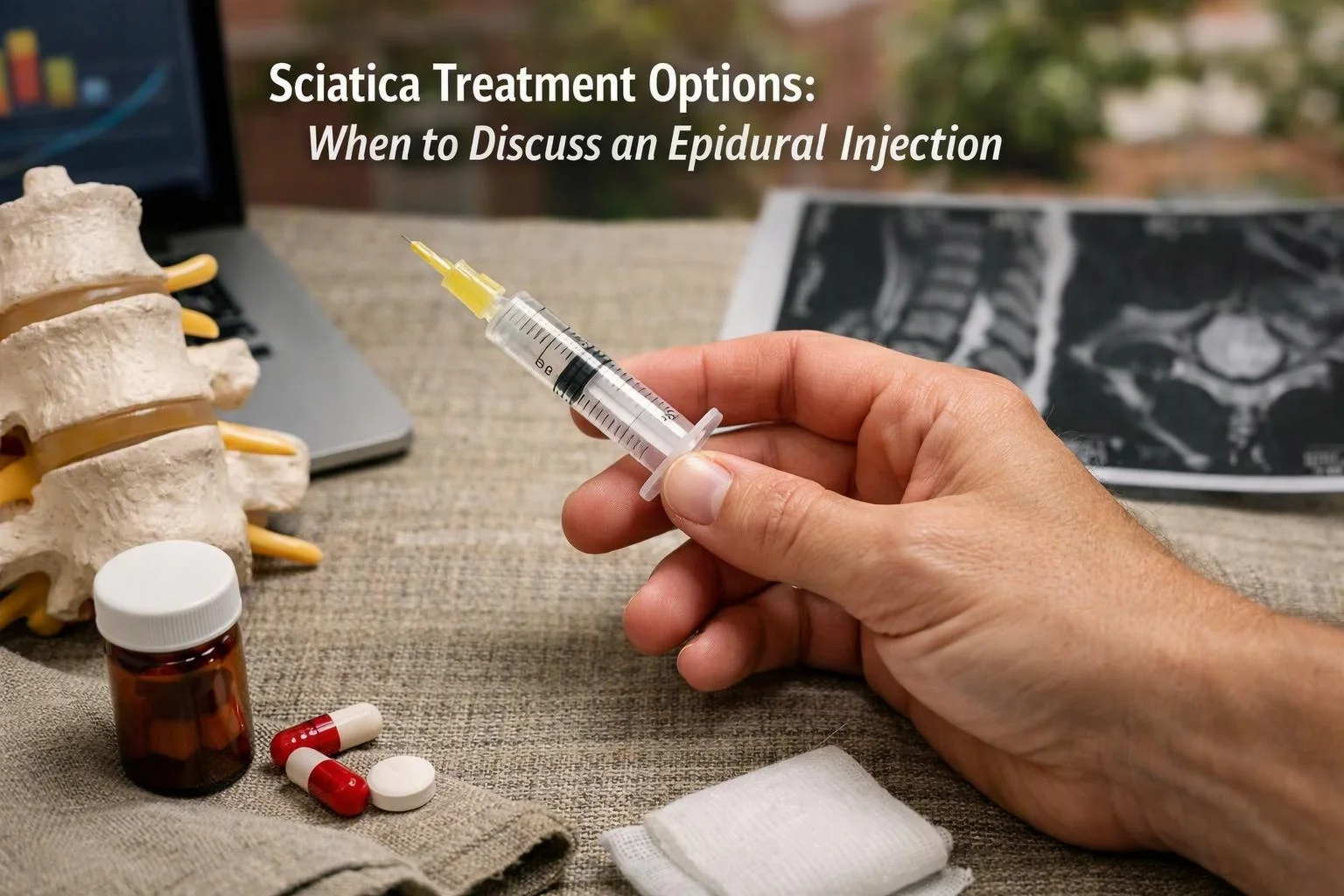
Yes, an epidural steroid injection can help some people with sciatica when an irritated spinal nerve causes leg pain. Sciatica often involves lumbar radiculopathy, which can create radiating leg pain, tingling, numbness, or weakness.
We first review the pain pattern and likely cause. A herniated disc, spinal stenosis, or nerve root compression may cause inflammation in the lumbar spine.
Our pain management physician uses the examination, medical history, and imaging review to guide treatment. You can also review our Sciatica Treatment options for a broader look at nonsurgical care.
What Does an Epidural Steroid Injection Target?
An epidural steroid injection targets inflammation near an irritated nerve root in the lumbar spine. The epidural space surrounds the spinal canal, where medication can reach tissues near the affected nerve.
The injection may be directed toward a specific nerve root or placed through a broader approach. Common approaches include a lumbar epidural steroid injection, transforaminal epidural injection, or interlaminar epidural injection.
Our team connects the injection target with your symptoms and imaging. The goal is to reduce nerve irritation and radiating leg pain while supporting a wider treatment plan.
How Do Injection and Noninjection Treatments Compare?
An epidural steroid injection focuses on nerve inflammation, while noninjection care builds symptom control through movement, medication, and daily adjustments. The right choice depends on your treatment goals and the cause of your symptoms.
| Factor | Epidural steroid injection | Noninjection treatment |
|---|---|---|
| Cost | Cost drivers may include the injection approach, imaging, facility needs, and coverage. | Cost drivers may include visits, therapy, medication, and the length of care. |
| Treatment timeline | May focus on targeted symptom relief within a broader plan. | Builds progress through repeated movement, activity, and symptom-control strategies. |
| Maintenance | May require follow-up care and review of treatment response. | May involve continued exercises, activity changes, and medication review. |
| Best for | Some people with nerve root inflammation and persistent leg pain. | People who can work on strength, mobility, and symptom control without an injection. |
| Treatment goal | Reduce inflammation and support participation in rehabilitation. | Improve function through conservative treatment and daily changes. |
We explain what the plan includes and which factors may affect the cost. You can request an exact quote after we review your needs and recommended care.
What Are the Advantages of an Epidural Steroid Injection?
An epidural steroid injection can provide targeted treatment when nerve root inflammation appears to drive your leg pain. We consider the possible benefit alongside treatment risks and alternatives.
Best for: an injection may fit people with persistent radiating leg pain linked to a specific irritated nerve root.
What Are the Advantages of Noninjection Sciatica Treatment?
Noninjection sciatica treatment can improve function through physical therapy, home activity changes, medication, and gradual movement. This conservative treatment approach may fit people who can safely build strength and mobility without an injection.
Best for: conservative care may fit people with manageable symptoms and no worsening neurologic warning signs.
Which Sciatica Treatment May Fit Your Symptoms?
The better treatment depends on the cause of your sciatica, your neurologic symptoms, and how you respond to earlier care. Pain location and severity help show whether symptoms follow a nerve pattern.
We also check weakness, numbness, tingling, your health history, and prior treatment response. Imaging may help identify a herniated disc, spinal stenosis, or nerve root compression.
A treatment plan should match your goals and daily needs. We may discuss physical therapy, medication, activity modification, an epidural injection, or other treatment alternatives.
What Should You Ask About an Epidural Injection?
Questions about diagnosis, injection target, expected benefit, risks, and alternatives can make your treatment decision clearer. Bring your medical records and imaging reports when available.
These questions help connect the procedure with a complete treatment plan. Our team explains the reasons for each option before you decide.
When Does Sciatica Need Prompt Medical Attention?
Progressive weakness, new bladder or bowel problems, and numbness around the saddle area need prompt medical attention. Severe worsening symptoms also require timely evaluation.
These warning signs can point to serious nerve pressure or another urgent problem. We recommend prompt medical assessment instead of waiting for routine follow-up care.
How We Plan Sciatica Treatment With You
Premier Injury Specialists reviews your symptoms and medical history, explains suitable options, and offers Free Consultations. We begin with your pain history and a physical examination.
Our team reviews medical records and imaging when they are available. We then connect the findings with your treatment goals and discuss injection risks, conservative treatment, and follow-up care.
We can help you understand whether Lumbar Radiculopathy Treatment or another form of pain management fits your symptoms. Contact us to discuss a clear treatment plan based on your needs.
Questions About Sciatica Treatment and Epidural Injections
Can an epidural steroid injection make sciatica worse?
An epidural steroid injection can cause a temporary symptom increase or other treatment risks, although outcomes vary. Premier Injury Specialists reviews your health history, explains the risks, and discusses alternatives before recommending an injection.
Is an epidural injection the same as back surgery?
No, an epidural injection is a nonsurgical treatment that places medication near an irritated spinal nerve. Back surgery involves an operation and has a different purpose, process, and risk profile.
What happens if sciatica does not improve with conservative care?
Sciatica that does not improve with conservative care needs a fresh review of the diagnosis, nerve findings, imaging, and treatment response. We may discuss an epidural injection, updated rehabilitation, medication changes, or other treatment alternatives.
Can sciatica return after treatment?
Yes, sciatica can return when a spinal nerve becomes irritated again or the underlying cause remains active. Follow-up care helps track symptoms and adjust your treatment plan when pain, numbness, or weakness changes.
Premier Injury Specialists is ready to review your symptoms, explain your options, and help you plan appropriate follow-up care. Contact us for Free Consultations.
Related Resources
How Imaging Guides Pain Procedures: Fluoroscopy and Ultrasound
What Goes With ItPain Injections: Potential Benefits, Risks, and Recovery
What Goes With ItHow Pain Specialists Evaluate Symptoms: Exams, Imaging, and Nerve Tests
What It SolvesSciatica: Recognizing Radiating Leg Pain and Understanding Treatment Options