
What Is Spinal Stenosis?
Spinal Stenosis is a narrowing of the spaces within the spine that can reduce room for the spinal cord or nearby nerves. The narrowing often develops in the neck or lower back. Pressure on nerves may cause back pain, leg pain, numbness, tingling, weakness, or trouble walking. For more detail, see Spinal Stenosis Symptoms: Pain, Numbness, and Trouble Walking.
Quick Facts About Spinal Stenosis
Category
Spinal condition
Used for
Explaining nerve pressure and back pain
Common confusion
Not the same as a herniated disc
Also called
Narrowed spinal canal, Spinal canal stenosis
Often discussed with
Back Pain Treatment
Key Takeaways About Spinal Stenosis
- Narrowed spinal spaces can affect the spinal cord or nearby nerves.
- Symptoms may worsen during standing or walking.
- Spinal stenosis is not the same as a herniated disc.
How Spinal Stenosis Works
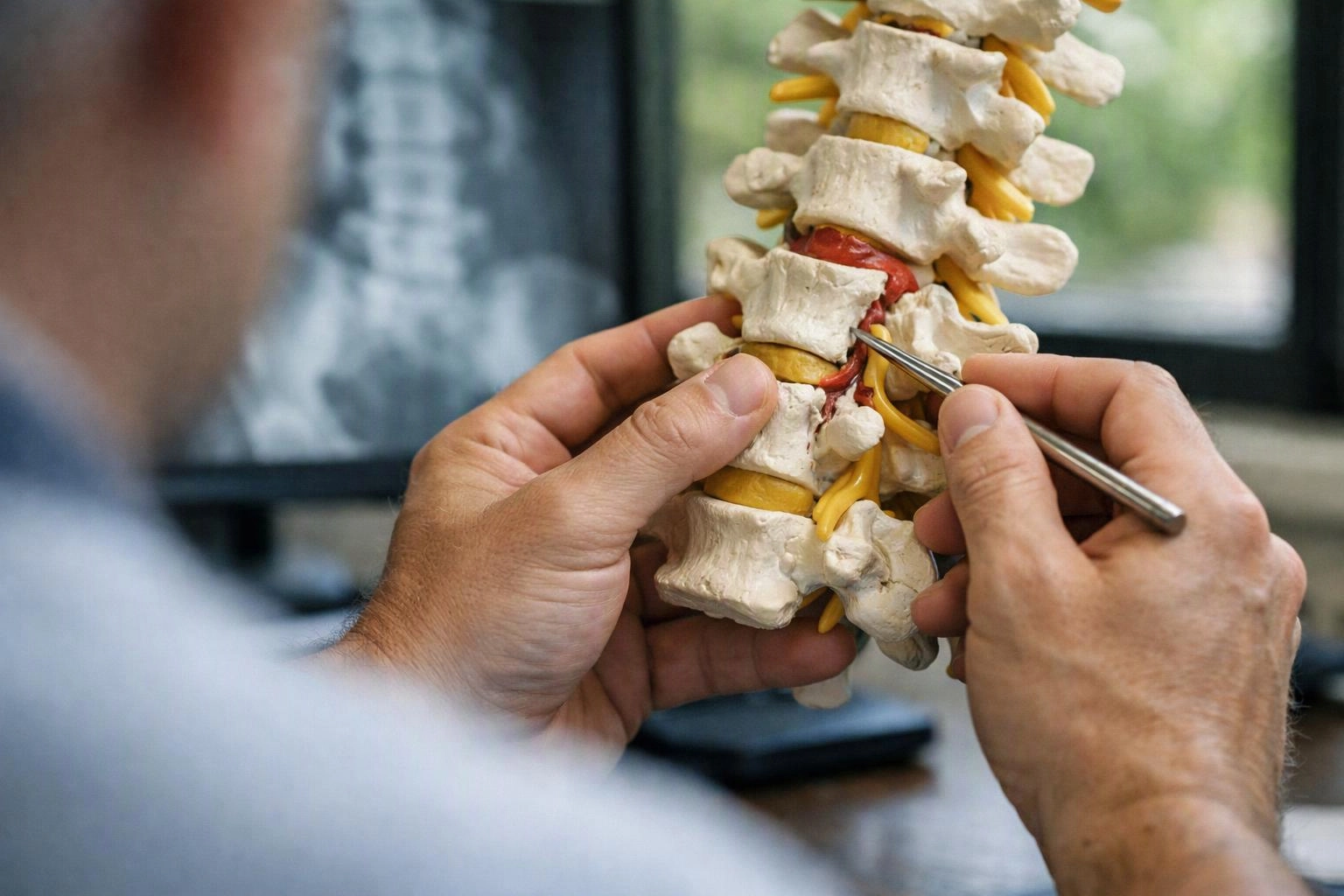
Spinal stenosis develops when bone, joints, discs, or thickened ligaments reduce the open space inside the spine. The reduced space can press on the spinal cord or nerve roots. The location of the narrowing helps explain where symptoms appear.
Related glossary terms: Lumbar Radiculopathy, Radicular Pain, Spondylosis.
Lower back narrowing may cause pain, tingling, numbness, or weakness in the buttocks and legs. Neck narrowing may affect the shoulders, arms, hands, or balance. Symptoms can change with posture, standing, or walking. Imaging may show the narrowed area, while a physical exam helps connect that finding with symptoms.
How it differs from related problems
A herniated disc involves disc material pushing outward. Spinal stenosis describes a smaller passageway around nerves. Both conditions can occur together, so the clinical picture guides treatment planning.
From the Premier Injury Specialists team
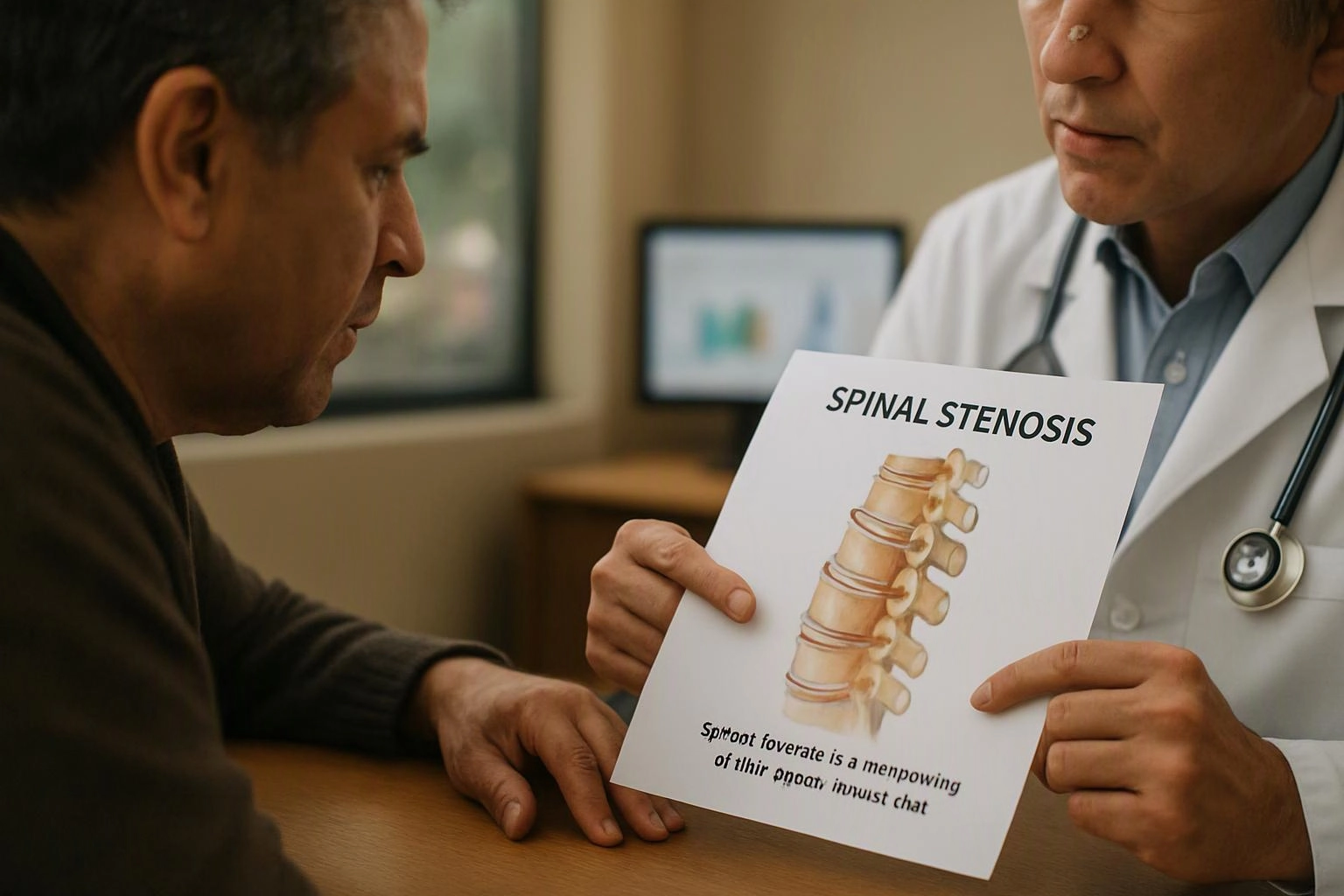
When we assess spinal stenosis, we connect reported symptoms with the affected spinal region and examination findings. We also review imaging when available, because a narrowed space does not always explain every source of back or leg pain.
Spinal Stenosis in Practice: A Real-World Example
A person with lower back spinal stenosis may feel aching in the back and heaviness in the legs while standing. Sitting may ease the symptoms because the spinal position creates more room for irritated nerves.
Related Services
Related Terms
Lumbar Radiculopathy
Lumbar Radiculopathy is a nerve root problem in the lower spine that can cause pain, tingling…
Radicular Pain
Radicular Pain is pain caused by irritation or pressure on a spinal nerve root. The pain…
Spondylosis
Spondylosis is age-related wear in the spine that can affect discs, joints, and nearby bones. In…
Disc Degeneration
Disc Degeneration is a gradual change in the soft discs between the spine’s bones. These discs…
Premier Injury Specialists
Have Questions About Spinal Stenosis?
Contact Premier Injury Specialists for practical guidance on Spinal Stenosis and related pain management physician work in Forest Park.