
What Is Disc Degeneration?
Disc Degeneration is a gradual change in the soft discs between the spine’s bones. These discs can lose water, height, or flexibility, which may reduce their ability to cushion movement. The changes can affect nearby joints or nerves, but imaging findings do not always explain a person’s pain or other symptoms.
Quick Facts About Disc Degeneration
Category
Spinal disc condition
Used for
Understanding disc-related back or neck symptoms
Common confusion
Not the same as a herniated disc
Also called
Degenerative disc disease, Intervertebral Disc Degeneration
Often discussed with
Herniated Disc Treatment, Imaging Referrals
Key Takeaways About Disc Degeneration
- Disc Degeneration affects the discs between the spine’s bones.
- Imaging findings may not match pain severity.
- Disc Degeneration is not the same as a herniated disc.
How Disc Degeneration Works
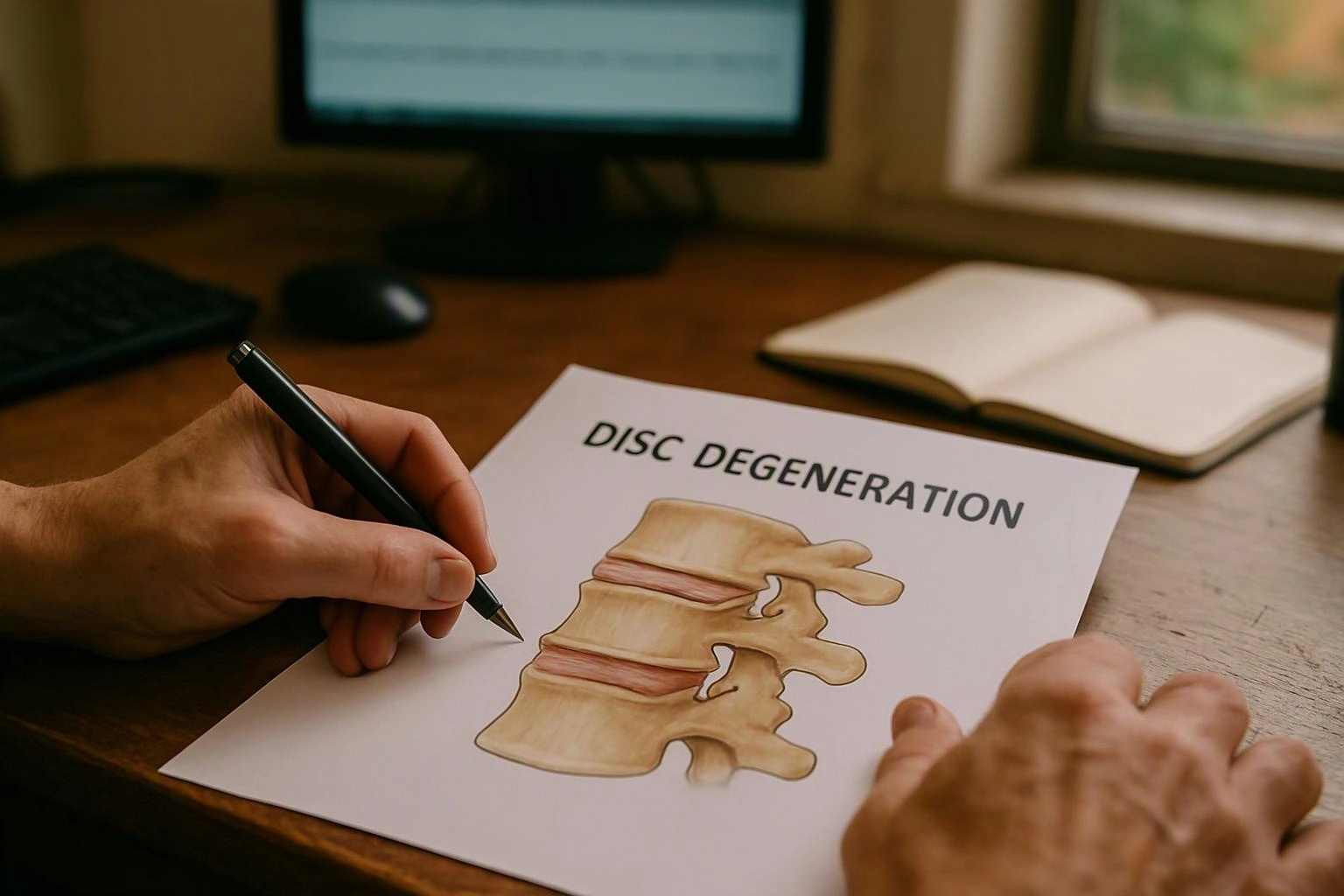
Disc Degeneration changes the structure of a spinal disc. A disc has a tough outer ring and a softer center. Over time, the disc may lose water and height, so it may cushion movement less effectively.
Related glossary terms: Discography, Lumbar Radiculopathy, Radicular Pain.
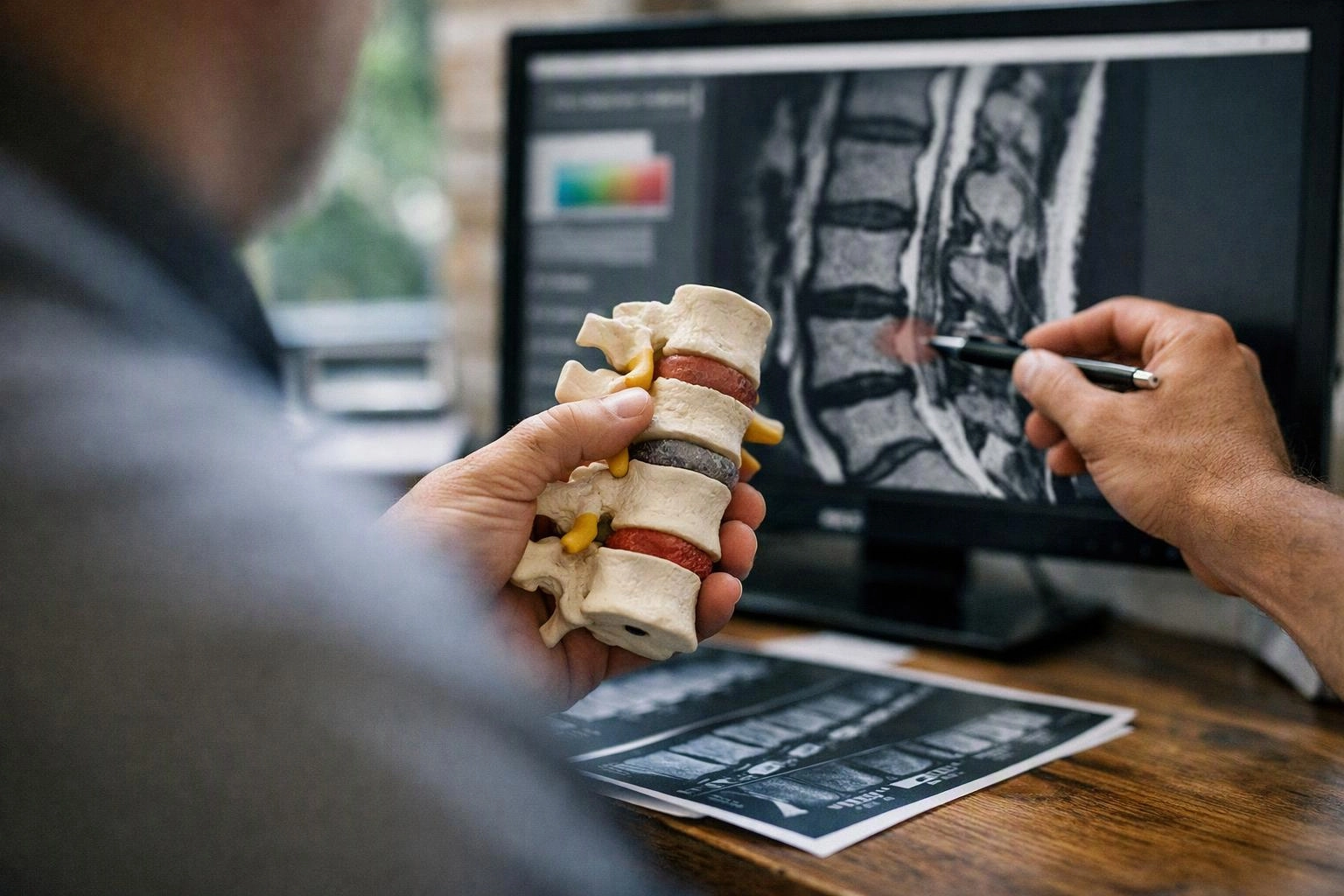
Doctors may see these changes on an MRI or other imaging study. The findings can help explain symptoms, but they don't prove that a disc causes pain. A herniated disc occurs when disc material pushes through a weakened outer ring. Disc degeneration can exist without a herniation. Nearby joints, muscles, or nerves may also affect symptoms.
A spinal nerve can become irritated when nearby disc changes narrow the space around it. That irritation may cause pain, tingling, or weakness in an area connected to the nerve.
From the Premier Injury Specialists team
When we review Disc Degeneration, we connect imaging findings with the person’s symptoms, examination, and injury history. Our team also checks whether a herniation, nerve irritation, or another spinal condition better explains the pain before discussing Herniated Disc Treatment.
Disc Degeneration in Practice: A Real-World Example
A person develops back pain after a vehicle crash, and imaging shows disc degeneration in the lower spine. The care team compares that finding with the person’s examination and symptoms before linking the disc change to the current pain.
Related Services
Related Terms
Discography
Discography is a diagnostic procedure that places contrast material into one or more spinal discs while…
Lumbar Radiculopathy
Lumbar Radiculopathy is a nerve root problem in the lower spine that can cause pain, tingling…
Radicular Pain
Radicular Pain is pain caused by irritation or pressure on a spinal nerve root. The pain…
Spinal Stenosis
Spinal Stenosis is a narrowing of the spaces within the spine that can reduce room for…
Premier Injury Specialists
Have Questions About Disc Degeneration?
Contact Premier Injury Specialists for practical guidance on Disc Degeneration and related pain management physician work in Forest Park.