Spinal Stenosis Symptoms: Pain, Numbness, and Trouble Walking
Spinal stenosis symptoms can include pain, numbness, weakness, and trouble walking, often worsening with standing or walking and easing with sitting or leaning forward. Premier Injury Specialists evaluates the pattern and explains treatment options based on the affected spinal area and nerve symptoms.
Request an EstimateWhat Is Spinal Stenosis?
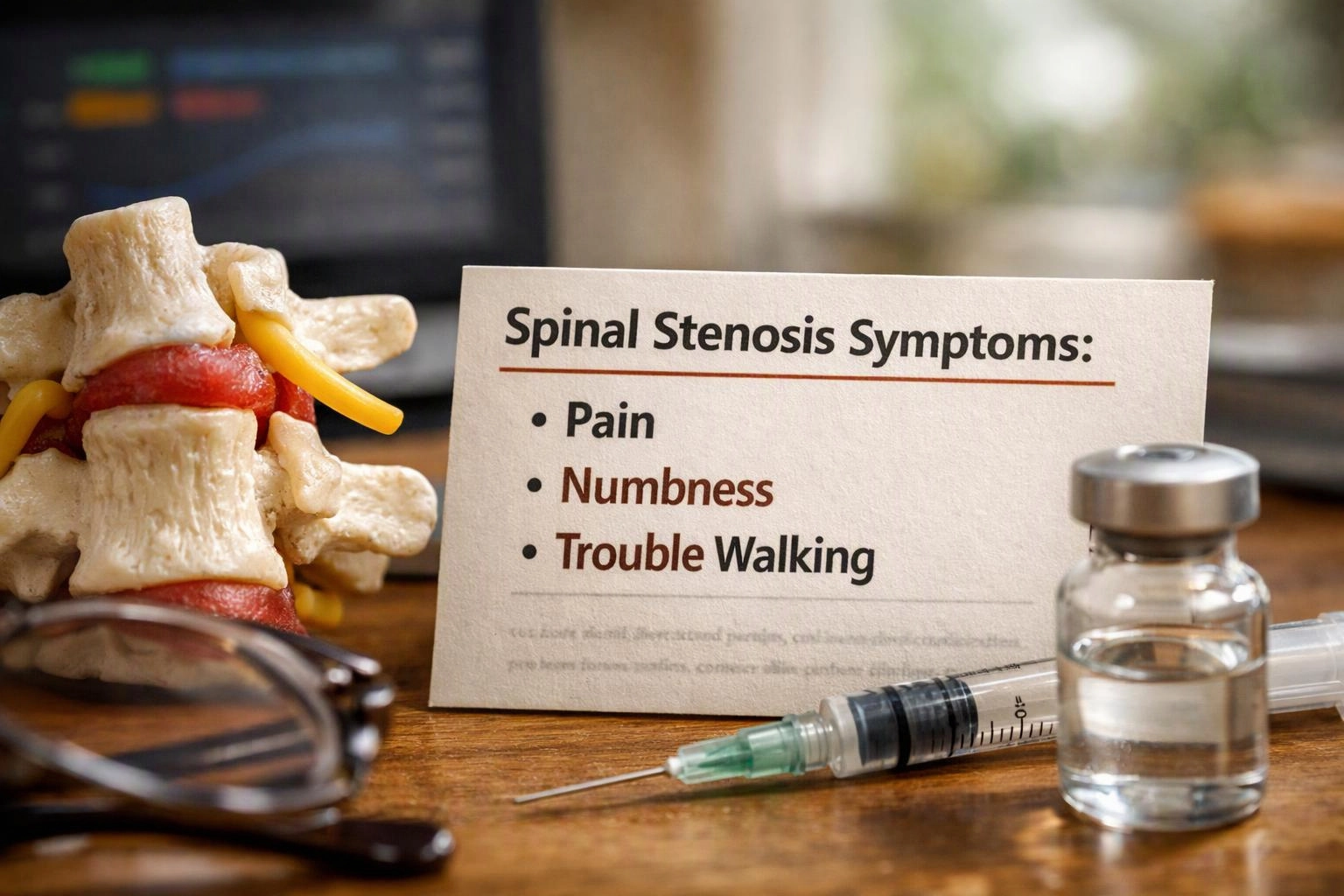
Spinal stenosis is a spinal disorder that narrows the open space inside the spine. The narrowed spinal canal can place pressure on the nerve roots or spinal cord.
The lumbar spine is in the lower back, so lumbar spinal stenosis often affects the legs. The cervical spine is in the neck, so cervical spinal stenosis may affect the arms, hands, balance, or walking.
We connect the affected spinal area with your symptom pattern. This helps our team explain whether nerve compression, spinal cord pressure, or another cause may be involved.
What Symptoms Can Spinal Stenosis Cause?
Spinal stenosis symptoms depend on where narrowing occurs and which nerves are affected. Symptoms may affect the back, neck, arms, legs, or walking ability.
Our team looks at how symptoms start, where they travel, and what makes them better or worse.
Why Does Spinal Stenosis Hurt More When You Walk?
Spinal stenosis can cause leg pain when walking because standing and walking can increase pressure around narrowed nerves. Sitting or leaning forward often reduces that pressure and may ease symptoms.
Doctors call this pattern neurogenic claudication. Standing or walking can bring on leg pain, numbness, or heaviness, while sitting or forward bending may provide relief.
We ask about pain when walking, pain relieved by sitting, and changes in posture. This information helps us separate spinal stenosis from other causes of leg pain and radiculopathy.
What Causes Spinal Stenosis?
Spinal stenosis usually develops when changes in the spine reduce space around the nerves. Several conditions can contribute to this narrowing.
We review your medical history and imaging findings to identify the changes that may be causing nerve compression.
How Is Spinal Stenosis Diagnosed?
Spinal stenosis is diagnosed by matching your symptoms with findings from a medical and neurologic examination. No single image tells the whole story.
We review your medical history, symptom pattern, strength, sensation, reflexes, balance, and movement. We also consider whether symptoms suggest lumbar radiculopathy, cervical radiculopathy, or spinal cord involvement.
Magnetic resonance imaging can show discs, ligaments, nerve roots, and the spinal cord. Computed tomography can show bone changes, while an X-ray can show alignment and movement of the vertebrae.
Our team uses imaging as part of the full evaluation. We do not treat an image without considering your daily symptoms and examination findings.
How Is Spinal Stenosis Treated?
Spinal stenosis treatment depends on symptom severity, nerve involvement, spinal location, and response to conservative care. Our team can explain whether spinal stenosis treatment fits your symptoms and evaluation.
Conservative treatment may include physical therapy, activity changes, posture work, and pain medication. These options can help improve movement and reduce stress around irritated nerves.
An epidural steroid injection or nerve root injection may be considered when nerve inflammation contributes to pain. We review the affected level, symptom pattern, and treatment goals before recommending an injection.
Surgery may require evaluation when symptoms remain severe or neurologic problems progress. Our team can also discuss how lumbar radiculopathy and cervical radiculopathy affect treatment decisions.
Can You Prevent Spinal Stenosis Symptoms From Worsening?
Spinal stenosis cannot always be prevented, but healthy habits may help protect movement and manage symptoms. Prevention focuses on reducing strain and responding early to changes.
We help you match activity choices with your symptoms and physical limits. Small changes can make daily movement more comfortable.
When Should You Seek Care for Spinal Stenosis Symptoms?
Progressive weakness, new loss of balance, bowel or bladder changes, or numbness around the groin require prompt medical evaluation.
Severe pain also deserves timely attention, especially when it limits walking, sleep, or basic activities. Urgent neurologic symptoms can signal increasing pressure on nerve roots or the spinal cord.
We assess changes in strength, sensation, coordination, and bladder or bowel function. Seek urgent medical care when these warning signs appear or worsen quickly.
Questions About Spinal Stenosis Symptoms
Can spinal stenosis cause numbness and weakness?
Yes, spinal stenosis can cause numbness and weakness when narrowed spaces affect nerve roots or the spinal cord. Premier Injury Specialists checks the location and pattern of these symptoms to guide treatment decisions.
Can spinal stenosis symptoms come and go?
Yes, spinal stenosis symptoms can come and go with changes in posture, activity, and nerve pressure. Symptoms may appear during standing or walking and ease after sitting or leaning forward.
Is spinal stenosis always painful?
No, spinal stenosis isn't always painful. Some people have numbness, tingling, weakness, leg heaviness, or walking changes without strong back or neck pain.
What is the difference between spinal stenosis and radiculopathy?
Spinal stenosis describes narrowing around the spinal cord or nerve roots, while radiculopathy describes symptoms caused by irritation or compression of a nerve root. Spinal stenosis can cause radiculopathy, but radiculopathy can also have other causes.
Premier Injury Specialists evaluates your symptoms, examination findings, and available imaging to explain the next step. Contact our team to discuss your symptoms and treatment options.