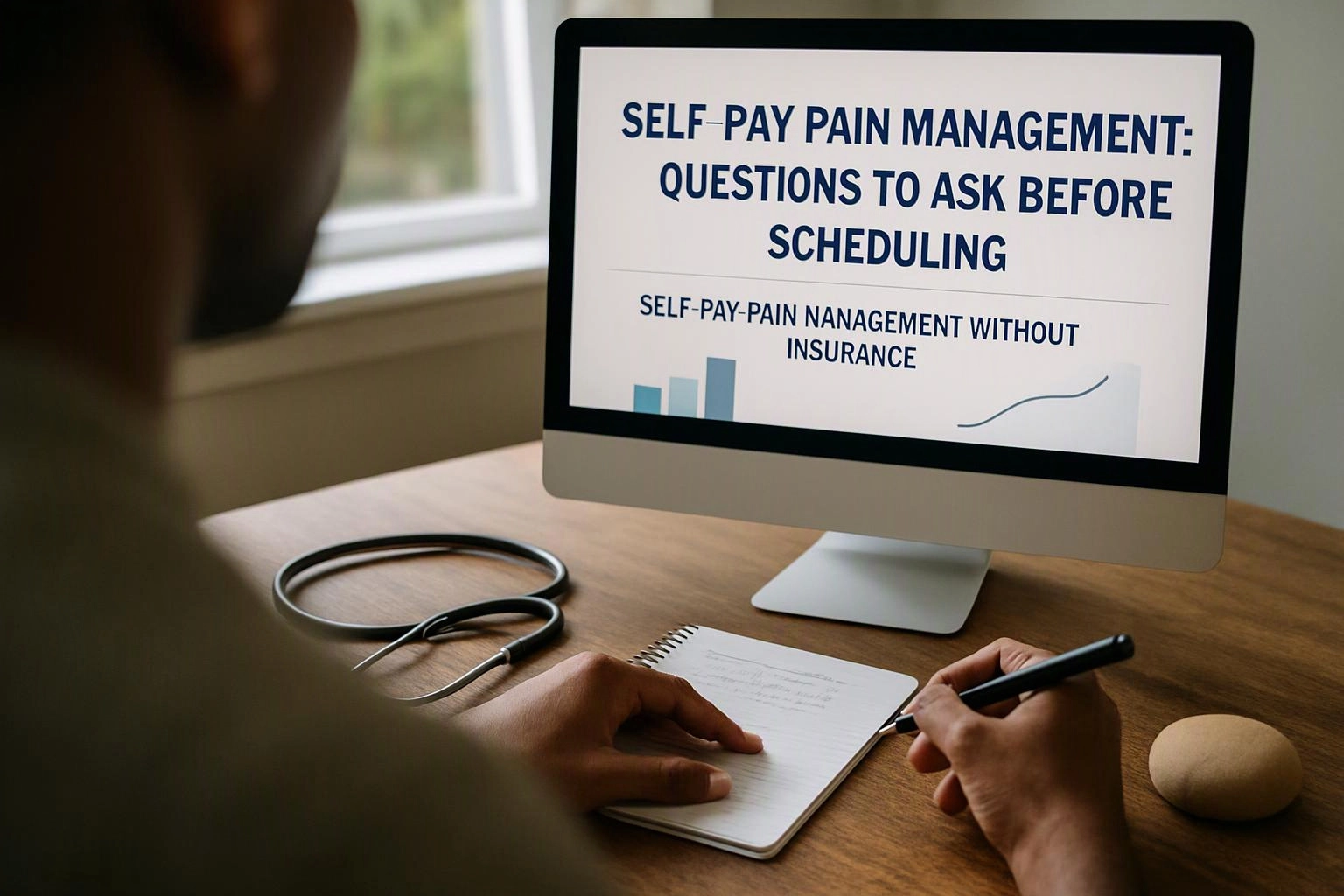
Self-Pay Pain Management: Questions to Ask Before Scheduling
Self-pay pain management helps patients evaluate pain management physician care without insurance. Premier Injury Specialists explains what to confirm about medical records, visit scope, cost drivers, payment terms, and scheduling before you book.
Request an EstimateCan You See a Pain Management Physician Without Insurance?
Pain management physicians may see patients who pay directly, but each office must confirm its self-pay process before scheduling. Self-pay healthcare gives an uninsured patient a direct way to ask about a medical consultation.
We confirm the requested visit, required records, payment terms, and available appointments before booking. Health insurance isn’t required for every pain evaluation, but the office’s rules decide whether self-pay care is available.
Self-Pay Care Compared With Insurance Billing
Self-pay care can offer a direct billing path, while insurance billing may depend on coverage, authorization, and plan rules. The right option depends on how you want to handle the visit and ongoing pain management.
Before scheduling, ask what the visit covers and how payment works. We explain the service scope so you can make a clear scheduling decision.
| Factor | Option A: Self-pay care | Option B: Insurance billing |
|---|---|---|
| Cost | The patient pays the agreed amount directly. The total depends on the visit, services, records, and treatment needs. | The patient may have plan-based costs, deductibles, copays, coinsurance, or uncovered services. |
| Timeline | Scheduling may follow the office’s self-pay intake process and available appointments. | Scheduling may also depend on referrals, coverage checks, or prior authorization. |
| Maintenance | The patient manages payment for follow-up visits and related care directly. | The patient must track plan rules, authorizations, network status, and claim processing. |
| Best for | Patients who want to ask about direct payment and don’t plan to use insurance for the visit. | Patients whose plan may cover the visit and who can meet its billing requirements. |
What Should You Ask for in a Self-Pay Quote?
A self-pay quote should explain the visit scope, included services, records needed, payment timing, and possible follow-up charges. Ask what the quote doesn’t include before you accept the appointment.
These questions help you compare the written terms with your treatment goals. They also clarify whether the visit includes a pain evaluation or only a record review.
How Does Self-Pay Pain Management Scheduling Work?
Self-pay scheduling starts by confirming the visit type, required records, payment terms, and appointment availability with the office. Patient intake also covers your pain history, current medicines, prior treatment, and treatment goals.
Our team reviews the information needed for the pain management physician. We use that information to explain the requested visit before scheduling.
What Are the Advantages of Self-Pay Pain Management?
Self-pay pain management can give patients a direct way to ask about care without relying on insurance billing for the visit. It can also make the payment discussion part of the scheduling process.
Insurance billing may still suit patients who want to use available plan benefits. The best option depends on coverage rules, payment preferences, and the care you want to discuss.
Self-pay care
Best for patients who want to ask about direct payment and understand the visit terms before booking.
Insurance billing
Best for patients who want to use available health plan benefits and can follow the plan’s billing requirements.
What Medical Records Should You Prepare Before Scheduling?
Medical records help the pain management physician understand your pain history and review prior care before the visit. Complete information can support a clearer treatment plan discussion.
Our team can explain which documents support the visit. We also help organize information through our Medical Documentation service when records need structure.
How Can You Confirm the Right Self-Pay Appointment?
The right self-pay appointment matches your pain concern, required records, payment terms, and follow-up process. Confirm these details before accepting the appointment.
A written confirmation helps prevent confusion about the pain management consultation. Keep the information with your other medical documentation.
How Premier Injury Specialists Helps Patients Prepare for Pain Management Care
Premier Injury Specialists helps patients clarify the self-pay visit, organize medical information, and prepare questions before scheduling. We focus on the records, visit scope, and payment details that shape the intake process.
Our team explains what the requested visit covers and helps patients prepare for the discussion. We also provide upfront pricing information for the requested service when applicable.
Questions About Self-Pay Pain Management
Do pain management clinics offer self-pay options?
Premier Injury Specialists offers a direct way to ask about self-pay pain management without using insurance. We confirm the visit scope, records, payment terms, and scheduling details before booking.
Can I use medical records from another doctor for a self-pay pain visit?
Yes, existing medical records may help explain your pain history and prior treatment. Ask our team which records, imaging reports, and medication information to send before the visit.
Do I need a referral for self-pay pain management?
A referral may depend on the office process and the requested visit. We confirm whether referral documents are needed during patient intake.
What happens if I need follow-up care after a self-pay consultation?
Follow-up care is handled through the office’s self-pay process. Ask how follow-up visits, additional services, and payment terms are handled before scheduling the initial consultation.
Can I ask for payment terms before scheduling a pain management visit?
Yes, you can ask for payment terms before scheduling. We explain what the requested visit covers, when payment is due, which payment methods are accepted, and how follow-up care is handled.
Premier Injury Specialists can help you prepare your records and questions before scheduling self-pay pain management care. Contact our team to discuss the requested visit and next steps.
Related Resources
Whiplash After a Car Accident: Symptoms and When to Seek Care
What It SolvesHeadache After a Head Injury: Symptoms That Need Evaluation
What Goes With ItHow Pain Specialists Evaluate Symptoms: Exams, Imaging, and Nerve Tests
What Goes With ItPain Management Beyond Opioids: Treatment Options and Care Planning