
Herniated Disc and Radiating Back Pain Treatment
Herniated disc treatment for back pain starts with an exam to identify nerve irritation and its cause. Premier Injury Specialists may use imaging referrals, medication guidance, injections, and follow-up care based on your symptoms.
Request an Estimate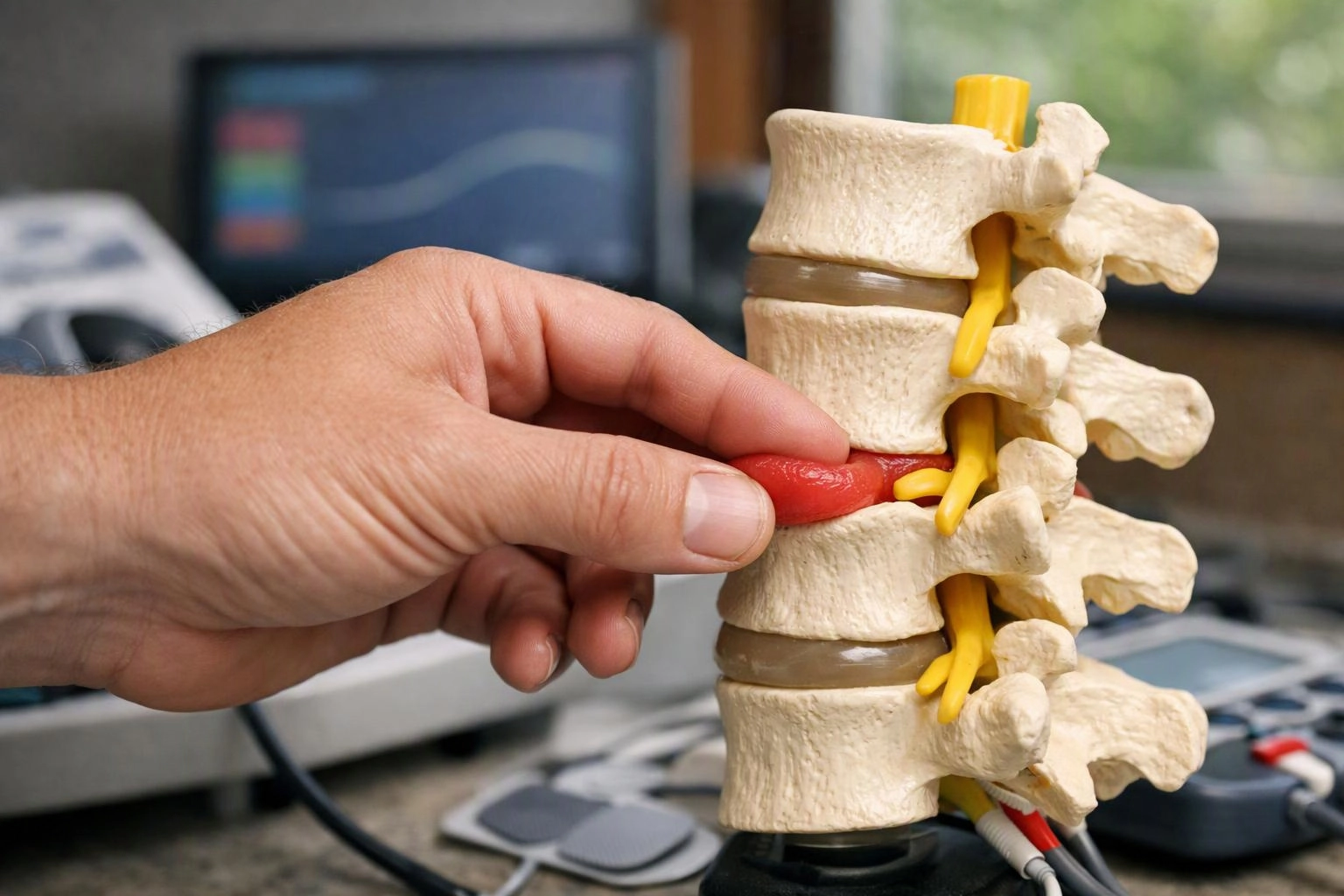
What Is a Herniated Disc?
Herniated disc is a spinal disc problem that can press on nearby nerves and cause back or leg pain.
A spinal disc sits between the vertebrae in the spinal column. Each disc has a tough outer layer and a softer inner center. A tear or bulge can irritate a nearby nerve root.
That irritation may cause lower back pain, nerve pain, or symptoms that travel into an arm or leg. A bulging disc and degenerative disc changes can create similar symptoms, so our pain management physician looks at the full pattern.
What Signs Can a Herniated Disc Cause?
Herniated discs can cause symptoms that follow the path of an irritated spinal nerve.
Our team connects the symptom pattern with your examination findings. Common signs include:
What Causes a Herniated Disc?
Herniated discs can develop when a spinal disc becomes weaker or faces sudden stress. Our evaluation considers both recent events and gradual changes.
Common causes include:
How Is a Herniated Disc Diagnosed?
A herniated disc is diagnosed through a medical history, physical examination, and imaging when symptoms require more detail.
We review when your pain began, where it travels, and what makes it better or worse. A physical examination checks movement, tenderness, strength, and reflexes.
A neurological examination helps us look for signs of nerve irritation or nerve compression. When the findings call for more detail, we may arrange imaging referrals, including magnetic resonance imaging.
Imaging referrals can show disc material, the spinal canal, and nearby nerve structures. Our team matches those findings with your symptoms instead of treating an image alone.
Which Herniated Disc Treatments Can Relieve Back Pain?
Herniated disc treatment can include conservative care, pain management, imaging referrals, and epidural steroid injections when clinically appropriate.
Back Pain Treatment depends on your symptoms, examination, medical history, and treatment goals. We may recommend activity modification, medication guidance, or a physical therapy referral.
Activity modification can reduce movements that increase nerve irritation while you continue safe daily movement. Medication guidance focuses on how prescribed or over-the-counter options may fit your health needs.
When nerve inflammation contributes to radiating pain, Epidural Steroid Injections may be part of the treatment plan. We explain the purpose, possible risks, and expected follow-up before recommending an injection.
Follow-up evaluation helps us review pain relief, function, and any new symptoms. We can adjust the plan when your response shows that another approach is needed.
When Are Epidural Steroid Injections Considered?
Epidural steroid injections may be considered when nerve inflammation causes persistent radiating pain and other care needs added support.
We look for symptoms that follow a nerve path, such as radiating leg pain from a lumbar disc problem. We also review examination findings and available imaging before making a recommendation.
Injection risks can include temporary soreness, infection, bleeding, nerve injury, or medication-related effects. We discuss these risks and explain how treatment response will guide follow-up care.
When Does Radiating Back Pain Need Prompt Medical Attention?
Radiating back pain needs prompt medical attention when it appears with progressive weakness, bladder or bowel changes, or saddle numbness.
Progressive weakness can signal worsening spinal nerve compression. Loss of bladder control, loss of bowel control, or numbness in the saddle area needs urgent medical evaluation.
Severe or worsening pain also deserves prompt attention, especially when it follows trauma or comes with new neurological symptoms. Seek urgent care when these warning signs appear.
How Can You Reduce the Risk of Future Disc Problems?
Daily habits can support spinal health and reduce stress on the back. Our team can help you choose safe goals that match your symptoms and abilities.
Helpful prevention steps include:
What Should You Bring to a Herniated Disc Evaluation?
A herniated disc evaluation is easier to plan when you bring your symptom history, prior imaging, medication list, and relevant medical documentation.
These details help our team connect your symptoms with your examination and treatment goals.
How Does Premier Injury Specialists Plan Herniated Disc Care?
Premier Injury Specialists reviews your symptoms and examination findings before coordinating treatment, imaging referrals, injections, or medical documentation.
Our pain management physician starts with a clinical evaluation. We assess pain location, nerve symptoms, movement, strength, and relevant medical history.
We then explain suitable treatment options in clear terms. These options may include conservative care, medication guidance, physical therapy referral, or epidural steroid injections.
Our team also helps organize medical documentation when it supports your ongoing care. Follow-up care gives us a chance to review your response and address changes in your symptoms.
Contact Premier Injury Specialists to discuss your symptoms and evaluation needs.
Get a Free EstimateQuestions About Herniated Disc and Radiating Back Pain
Can a herniated disc cause pain down the leg?
Yes, a herniated disc can cause pain down the leg when it irritates a lower-back nerve root. Premier Injury Specialists checks the pain pattern, strength, sensation, and reflexes during evaluation.
Can a herniated disc heal without surgery?
Yes, some herniated discs improve without surgery through conservative treatment and guided pain management. The right plan depends on symptoms, examination findings, nerve involvement, and your response to care.
When should I get imaging for radiating back pain?
Imaging for radiating back pain should be considered when symptoms persist, worsen, or suggest meaningful nerve irritation. We use the medical history and physical examination to decide when an imaging referral may add useful detail.
Are epidural steroid injections used for herniated disc pain?
Yes, epidural steroid injections may be used when nerve inflammation contributes to persistent radiating pain. We review possible benefits, risks, and follow-up needs before recommending an injection.
What symptoms suggest a herniated disc is affecting a nerve?
Radiating pain, numbness, tingling, or weakness can suggest that a herniated disc is affecting a nerve. Bladder or bowel changes and saddle numbness need prompt medical attention.
Related Resources
How Imaging Guides Pain Procedures: Fluoroscopy and Ultrasound
What Goes With ItPain Injections: Potential Benefits, Risks, and Recovery
What Goes With ItHow Pain Specialists Evaluate Symptoms: Exams, Imaging, and Nerve Tests
Compared ToFirst Pain Management Appointment: What to Expect and How to Prepare