Neck Pain That Travels Down the Arm: Possible Cervical Radiculopathy
Cervical radiculopathy symptoms include neck pain that spreads into the shoulder, arm, or hand, along with numbness, tingling, or weakness. Premier Injury Specialists evaluates the symptoms and their likely cause to guide treatment.
Request an Estimate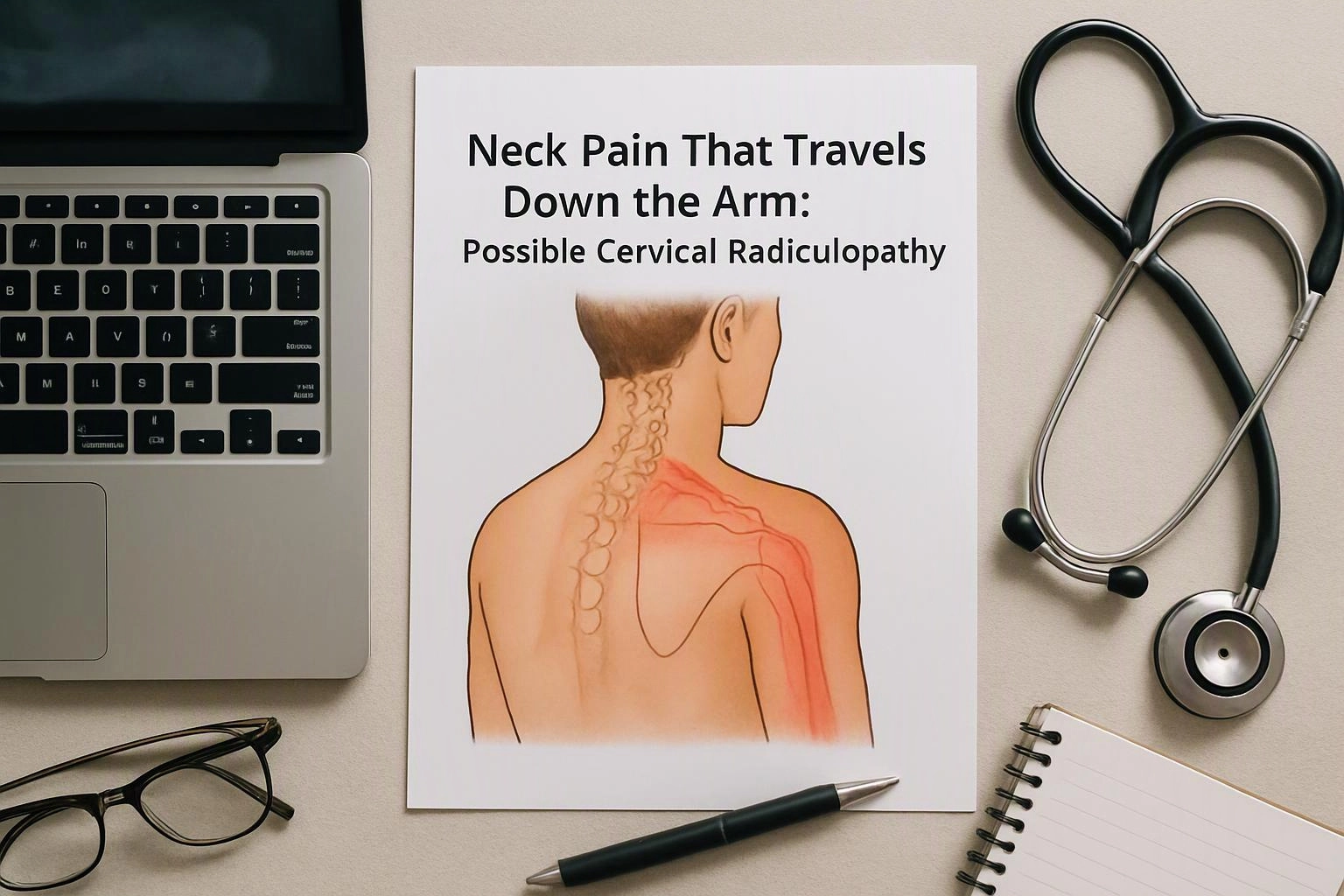
What Is Cervical Radiculopathy?
Cervical radiculopathy is a condition that occurs when a nerve root in the neck becomes irritated or compressed. The cervical spine contains bones, discs, and nerve pathways that connect the neck with the shoulder, arm, and hand.
A pinched nerve in the neck can cause neck pain and radiating arm pain. Our team connects your symptoms with the likely cervical nerve root so we can build a focused evaluation and treatment plan.
Our approach to Cervical Radiculopathy Treatment considers the affected pathway, your symptoms, and any signs of nerve irritation.
What Symptoms Can Cervical Radiculopathy Cause?
Cervical radiculopathy symptoms can travel from the neck into the shoulder, arm, hand, or fingers. The symptoms may follow one nerve pathway, so some people notice problems in only one arm.
The pattern can change with neck movement or certain positions. We ask when symptoms began and how they affect daily tasks, grip, and sensation.
Why Can Neck Pain Travel Down the Arm?
Neck pain can travel down the arm when pressure or inflammation affects a cervical nerve root. Nerve compression can send pain signals along the pathway from the neck to the arm or hand.
Our evaluation looks for the cause of nerve irritation, including changes in the discs and spaces around the cervical spine.
A cervical disc herniation can cause hand numbness or tingling when the affected nerve serves the hand or fingers. Similar symptoms can also result from cervical foraminal stenosis or cervical nerve root compression.
How Is Cervical Radiculopathy Diagnosed?
Cervical radiculopathy is diagnosed by matching the symptom pattern with a neck and neurological examination. Our team reviews your medical history and asks about pain, numbness, tingling, weakness, and changes in daily function.
A physical examination checks neck movement, range of motion, muscle strength, sensation, and reflexes. The neurological examination helps us compare the findings with the likely nerve root.
Imaging may help show a herniated disc, bone spur, disc degeneration, or spinal stenosis. We use the examination and imaging together because a scan alone doesn't always explain the source of arm pain.
When Should You Seek Care for Neck Pain That Travels Down Your Arm?
Neck pain that travels down the arm needs prompt medical attention when weakness, worsening numbness, or coordination problems develop. Persistent arm pain also deserves an evaluation when it doesn't improve or interferes with normal activities.
Severe neck pain, loss of sensation, or new difficulty using the hand can signal a more serious nerve problem. We assess these warning signs and guide you toward urgent medical evaluation when needed.
Seek urgent care for sudden or rapidly worsening neurological changes. Don't wait to schedule an evaluation when progressive weakness or coordination problems are present.
How Is Cervical Radiculopathy Treated?
Cervical radiculopathy treatment depends on the cause, symptom severity, neurological findings, and response to conservative care. Our team explains the options that fit your examination and likely source of nerve irritation.
Neck pain treatment may include activity changes, medication, and physical therapy. These options can help reduce pain, improve movement, and support normal function.
Injections may be considered when inflammation around a nerve root continues. Herniated disc treatment depends on the disc findings and the effect on nerve function.
Spinal surgery may be discussed when serious nerve problems persist or conservative care doesn't provide enough relief. We explain why a treatment may help and what findings support that choice.
How Can You Reduce the Risk of Recurrent Neck Nerve Symptoms?
You can reduce recurring neck nerve symptoms by supporting healthy posture, regular movement, and safe body mechanics. These habits won't prevent every cause, but they can reduce strain during daily activities.
Our team can discuss movement and activity changes that match your symptoms and physical findings.
What Can You Expect During a Cervical Radiculopathy Consultation?
A cervical radiculopathy consultation reviews your symptoms, examines nerve function, and explains suitable treatment options. Premier Injury Specialists uses the visit to connect your pain pattern with the findings from your neurological examination.
Our team will explain the next steps in clear language. The plan may include further diagnostic review, conservative care, or discussion of other treatment options.
Free Consultations are available for people who want to discuss neck pain that travels down the arm. Contact Premier Injury Specialists to arrange an evaluation and learn which next step fits your symptoms.
Related Resources
How Pain Specialists Evaluate Symptoms: Exams, Imaging, and Nerve Tests
What Goes With ItPain Evaluation After a Car Accident: Symptoms, Records, and Follow-Up
What Goes With ItTrigger Point Injections: When They May Help and What to Expect
Compared ToPain Management Physician vs. Orthopedic Doctor: Choosing Where to Start