Spine Pain Procedures Explained: Epidurals, Facet Injections, and Nerve Blocks
Spine pain injections include epidural steroid injections, facet joint injections, medial branch blocks, and sacroiliac joint injections. Premier Injury Specialists explains how each procedure targets a different pain source and when radiofrequency ablation may follow.
Request an EstimateWhat Types of Injections Treat Spine Pain?
Types of injections for spine pain include epidural steroid injections, facet joint injections, medial branch blocks, and sacroiliac joint injections. Premier Injury Specialists uses the suspected pain source to guide the treatment plan.
These interventional pain procedures may help calm inflammation, reduce nerve irritation, or confirm which joint causes pain. Our team reviews your symptoms and imaging before selecting a nerve block or another injection-based treatment.
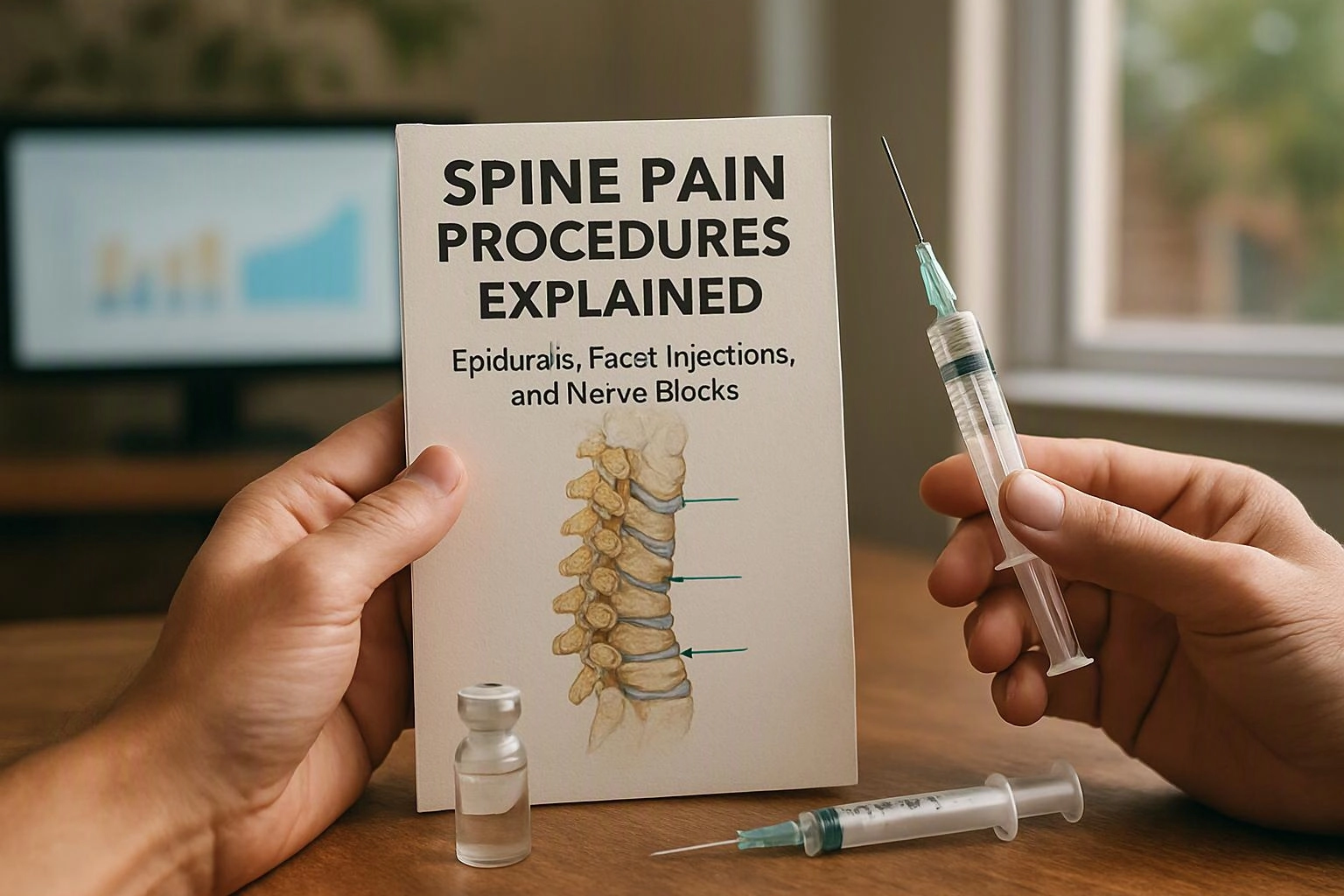
For symptoms linked to a spinal nerve root, our Epidural Steroid Injections service may be part of the discussion. The right procedure depends on whether pain travels along a nerve or stays near the spine.
How Each Spine Pain Procedure Works
Each spine injection reaches a different structure, so the goal changes with the suspected pain source. Image guidance helps our team place medication near the intended area.
| Procedure | Target | Common purpose |
|---|---|---|
| Epidural steroid injection | The epidural space near a spinal nerve root | Calms inflammation linked to radiating pain or sciatica |
| Facet joint injection | A facet joint | Treats joint inflammation and may provide diagnostic information |
| Medial branch block | A medial branch nerve | Tests whether facet-mediated pain travels through those nerves |
| Sacroiliac joint injection | The sacroiliac joint | Assesses and treats pain near the joint below the lower back |
A diagnostic injection can show whether a targeted structure contributes to your symptoms. We use that diagnostic response with your examination and imaging review.
When Are Epidural and Facet Procedures Used Together?
Epidural and facet procedures may be used together when symptoms suggest more than one pain source. Our pain management physician first separates nerve-related symptoms from joint pain.
We don't treat every injection as interchangeable. The treatment plan follows the pain pattern and the findings that support it.
How Do Epidural and Facet Procedures Work Together?
Combined treatment planning links each procedure to a suspected pain source and its diagnostic response. We use the sequence to make procedure selection more focused.
Each step can provide information for the next decision. Our team explains what the planned procedure includes before treatment begins.
What Is the Difference Between a Facet Injection and a Medial Branch Block?
A facet joint injection places medication in the joint, while a medial branch block places medication near the nerves that carry facet joint pain.
A facet joint injection is a therapeutic injection that may also provide useful diagnostic information. A medial branch block is a diagnostic block focused on the medial branch nerve.
We choose between them based on whether the joint itself or the nerve pathway needs testing. The response helps guide later treatment planning.
When Can Radiofrequency Ablation Follow a Nerve Block?
Radiofrequency ablation can follow a medial branch block when the block supports the medial branch nerves as the source of facet-related pain.
A nerve block temporarily reduces a nerve signal for diagnostic purposes. Radiofrequency treatment uses controlled energy to reduce pain signals for a longer-term treatment plan.
Our team reviews the diagnostic response before discussing ablation. The response must fit the pattern of facet-mediated pain and your treatment goals.
What Should You Expect During a Spine Injection Visit?
A spine injection visit starts with a review of your symptoms, health history, and treatment goals. We explain the planned procedure and answer questions before moving forward.
We also discuss whether the procedure is mainly therapeutic, diagnostic, or both. Your questions are part of the planning process.
How We Match the Procedure to the Pain Pattern
Premier Injury Specialists matches the procedure to pain location, radiating symptoms, neurologic symptoms, imaging findings, and patient goals.
Neck pain with arm symptoms may suggest irritation near a spinal nerve root. Local back pain may fit facet or sacroiliac joint pain, but the examination still matters.
We compare your history with the physical examination and imaging review. That process helps us build a treatment plan that addresses the most likely pain source.
What Changes the Cost of a Spine Pain Procedure?
The cost of a spine pain procedure depends on the injection type, treatment area, facility setting, and coverage details; Premier Injury Specialists can explain what a quote includes during a Free Consultations appointment.
Other cost drivers include the number of treatment areas and whether image guidance is part of the procedure. Insurance coverage can also change your personal responsibility.
We review the planned procedure, treatment areas, facility details, and coverage information when explaining a quote. Contact our team for an exact cost discussion.
Which Spine Pain Procedure May Fit Your Symptoms?
The best procedure depends on the location and behavior of your symptoms. The table shows common patterns, but our examination determines whether a procedure fits.
| Symptom pattern | Procedure that may be considered | Reason for consideration |
|---|---|---|
| Neck pain with arm pain | Epidural steroid injection | May target inflammation near a cervical spinal nerve root |
| Back pain with leg pain or sciatica | Epidural steroid injection | May address nerve irritation and radiating pain |
| Localized facet pain | Facet joint injection or medial branch block | May assess or treat facet-mediated pain |
| Pain near the sacroiliac joint | Sacroiliac joint injection | May assess pain arising from that joint |
| Nerve-related pain | Epidural injection or nerve block | May target an irritated nerve pathway |
Symptoms can overlap, so one pattern doesn't always identify one structure. We use the full clinical picture before recommending an interventional pain procedure.
Questions About Spine Pain Procedures
Are spine injections used for both neck and lower back pain?
Yes, spine injections can be used for both neck pain and lower back pain when the suspected pain source fits the procedure. Premier Injury Specialists reviews symptoms, examination findings, and imaging before choosing the target.
Can a nerve block help identify the source of spine pain?
Yes, a nerve block can help identify whether a targeted nerve carries the pain signal. We compare the diagnostic response with your symptoms and examination findings.
What happens if a medial branch block does not relieve facet pain?
If a medial branch block does not relieve facet pain, we reassess the suspected pain source and treatment plan. Other joints, nerves, or conditions may need evaluation.
Are sacroiliac joint injections used for pain below the lower back?
Yes, sacroiliac joint injections may be considered for pain near or below the lower back when the sacroiliac joint appears to be involved. We confirm the suspected source through the medical history and physical examination.
Spine pain procedures work best when the treatment matches the suspected pain source. Premier Injury Specialists can review your symptoms and explain the next step.
Contact Premier Injury Specialists about your spine pain procedure
Related Resources
Radiofrequency Ablation Providers Worth Comparing in Stockbridge (2026)
Compared ToPain Management Cost Factors: What Affects Your Out-of-Pocket Cost
Compared ToInsurance and Pain Management: Verify Coverage Before You Book
Compared ToEpidural Steroid Injection vs. Facet Joint Injection: How They Differ