Pain Management Options: From Therapy and Medication to Procedures
Pain management treatment types include physical therapy, medication, injections, nerve blocks and procedures selected for the pain source and goals. Premier Injury Specialists evaluates the condition and explains which options may fit.
Request an Estimate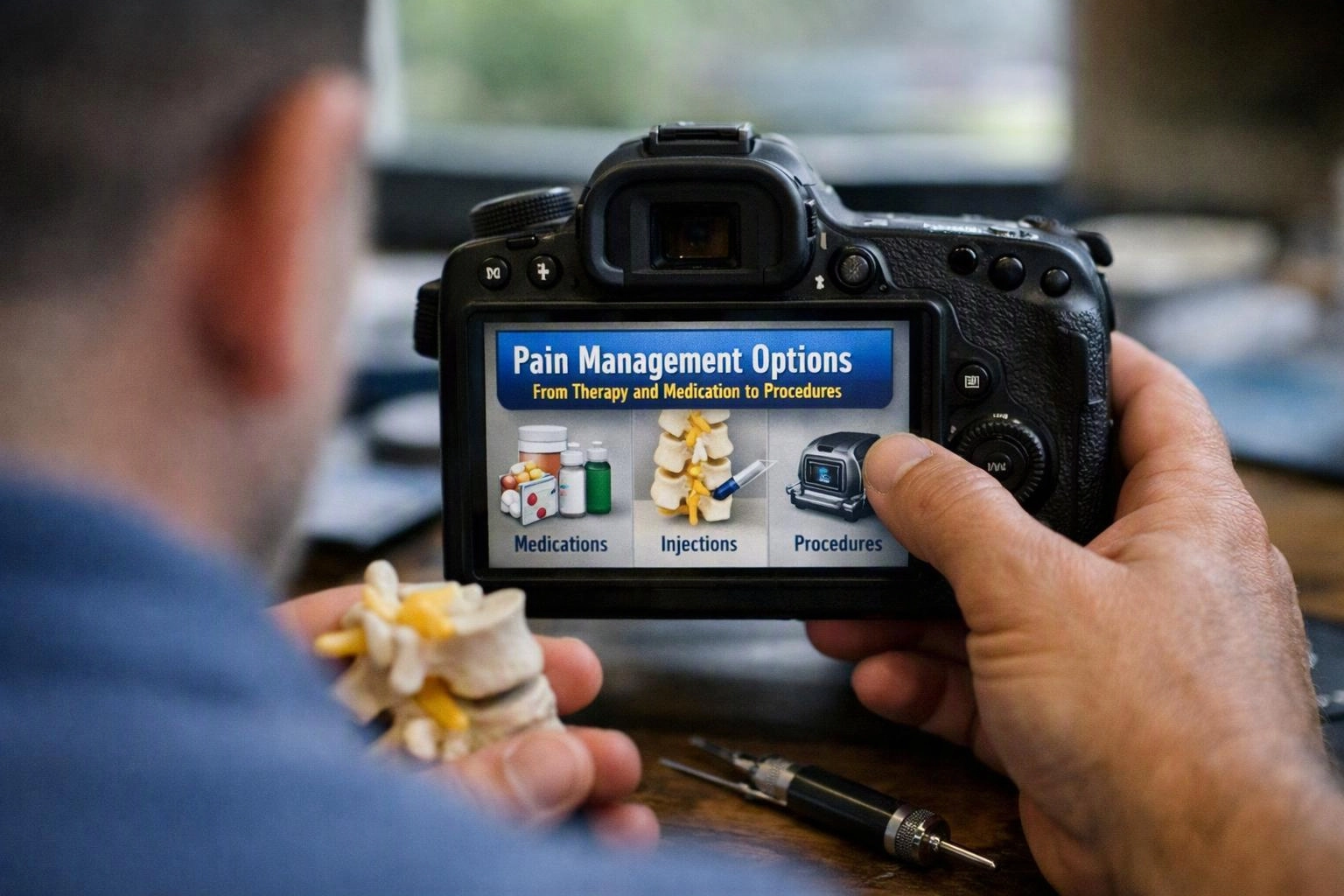
What Is Pain Management?
Pain management is a medical approach that identifies pain sources and combines suitable treatments to improve comfort and function.
Acute pain often follows an injury, illness or procedure. Chronic pain continues or returns over time and may involve the spine, joints, muscles or nerves.
A pain management physician reviews symptoms, medical history and daily limits. We use that information to build care around your treatment goals.
Our team can also help patients understand the options connected to auto accident injury evaluation when an injury causes back pain, neck pain or nerve irritation.
Which Types of Pain Management Treatments Are Available?
Pain management treatment types range from non-invasive care and medication to injections, nerve procedures and surgery when appropriate.
We match each option to the suspected pain source, health needs and personal goals.
| Treatment | Common purpose |
|---|---|
| Physical therapy | Improve movement, strength and function. |
| Medication management | Address pain, inflammation or related symptoms while reviewing medication risks. |
| Epidural steroid injections | Target inflammation near irritated spinal nerves. |
| Joint injections | Address pain and inflammation in a selected joint. |
| Nerve blocks | Temporarily interrupt pain signals from a targeted nerve. |
| Radiofrequency ablation | Use controlled energy to reduce signals from selected nerves. |
| Surgery | Address a structural problem when other care doesn't fit the condition. |
Therapy and Movement-Based Care
Physical therapy uses guided movement to support range of motion, strength and mobility.
Exercise therapy may help the body handle spinal pain, joint pain or musculoskeletal pain. We consider how pain affects walking, lifting, work and other daily tasks.
Medication and Symptom Control
Medication management reviews current medicines, symptoms and possible interactions.
Anti-inflammatory medication may help when inflammation contributes to pain. We discuss medication risks and review whether the treatment supports safe, useful function.
Injections and Nerve Procedures
Epidural steroid injections, joint injections and nerve blocks can target a suspected pain source.
Radiofrequency ablation may be considered for selected nerve-related pain. We use image guidance when it helps place a procedure accurately and safely.
When Do Conservative Care and Procedures Work Together?
Conservative treatment and interventional pain management often work together when one approach doesn't address every need.
We may coordinate options when the goal is to improve movement, reduce symptoms and support recovery.
How Do Pain Treatments Work Together?
Treatment planning connects diagnosis, symptom control, movement goals and follow-up care.
Our team explains how each option fits the plan, including what may change the total cost.
Cost drivers can include the treatment type, image guidance, facility needs, medication review and follow-up care. We explain what an evaluation or procedure includes and how to request an exact quote from our team.
What Does a Pain Management Physician Do?
A pain management physician evaluates the pain source, reviews prior care and builds a treatment plan around the patient's needs.
Our team reviews your medical history and performs a physical examination. We assess pain location, movement limits, nerve symptoms and changes in function.
Imaging may help show changes involving the spine, joints or other structures. We connect those findings with your symptoms before recommending care.
Premier Injury Specialists explains the diagnosis, treatment choices, procedure risks and follow-up care in clear terms.
How Is the Right Pain Treatment Chosen?
The right pain treatment depends on the condition, symptoms, prior care and goals.
We use the evaluation to decide whether conservative treatment, medication, a procedure or surgical consultation best fits the situation.
What Should You Discuss Before a Pain Procedure?
Before a pain procedure, discuss the goal, possible benefits, risks and alternatives.
We also review medication history, allergies, health conditions and recovery planning. These details help us decide whether the procedure fits your care plan.
Ask how image guidance may be used, what symptoms the procedure targets and how follow-up care will work. Our team explains procedure risks in plain language before moving forward.
How Can You Start a Pain Management Evaluation?
Pain evaluation starts with a review of symptoms, prior treatment and available medical records.
Bring imaging results, medication details and treatment history when available. These records help our team understand the pain source and avoid repeating steps unnecessarily.
Premier Injury Specialists offers Free Consultations to review your concerns and explain suitable next steps.
Contact our team to discuss your symptoms and arrange an evaluation. We’ll explain the treatment plan, expected benefits, alternatives and cost drivers that apply to your situation.
Questions About Pain Management Options
Are pain management treatments surgical or nonsurgical?
Pain management treatments can be surgical or nonsurgical, depending on the condition and treatment goals. Premier Injury Specialists reviews therapy, medication, injections, nerve procedures and surgical options when appropriate.
Can physical therapy and injections be part of the same pain treatment plan?
Yes, physical therapy and injections can be part of the same pain treatment plan. An injection may reduce targeted symptoms while therapy works on strength, movement and function.
When might a nerve block be used for pain?
A nerve block might be used when a specific nerve appears to contribute to pain. We may use the response to help guide diagnosis and future treatment planning.
What information should I bring to a pain management appointment?
Bring your medical history, imaging results, medication list and treatment history. Details about pain location, symptoms, movement limits and personal goals can also help us plan the evaluation.
Related Resources
Radiofrequency Ablation Providers Worth Comparing in Stockbridge (2026)
Compared ToFirst Pain Management Appointment: What to Expect and How to Prepare
Compared ToPain Management Cost Factors: What Affects Your Out-of-Pocket Cost
Compared ToInsurance and Pain Management: Verify Coverage Before You Book