
Nerve Block vs Trigger Point Injection: Which Treats the Source of Pain?
Nerve blocks target pain signals from an irritated nerve, while trigger point injections treat tight muscle areas that refer pain. Premier Injury Specialists uses your symptoms, exam findings, and pain pattern to guide the choice.
Request an Estimate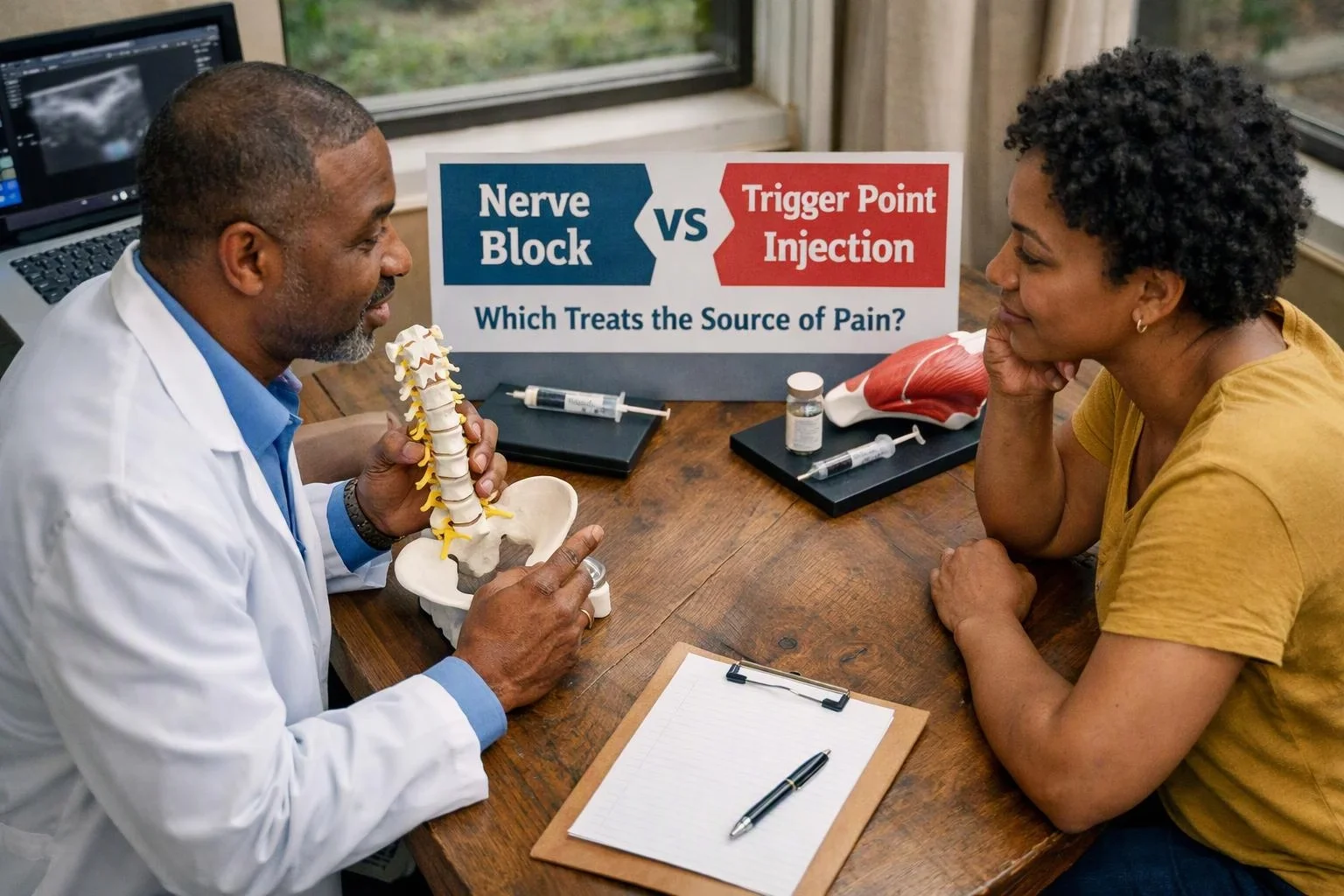
How Nerve Blocks and Trigger Point Injections Differ
Nerve blocks target pain carried by a specific nerve, while trigger point injections target painful muscle bands.
A nerve block places local anesthetic near a target nerve. The goal is to calm nerve irritation and help confirm the pain source.
A trigger point injection places medication into a tight muscle area. The area may feel tender and send referred pain into nearby regions.
Nerve Block vs Trigger Point Injection: Quick Comparison
The better option depends on whether the exam points to nerve pain or muscle-based referred pain. We match the treatment to the pain pattern, injection site, and treatment plan.
| Factor | Nerve Block | Trigger Point Injection |
|---|---|---|
| Treatment target | An irritated or overactive nerve | A painful, tight muscle band |
| Pain pattern | Burning, sharp, electric, or nerve-based pain | Tender muscle pain with referred pain |
| Cost drivers | Treatment type, target nerve, medication, and follow-up care | Treatment type, injection site, treatment areas, and follow-up care |
| Treatment timeline | Depends on the nerve problem and treatment response | Depends on muscle tension and treatment response |
| Maintenance | Guided by symptoms, diagnostic relief, and follow-up | Guided by muscle tenderness, movement, and follow-up |
| Best use | Pain linked to a specific nerve | Pain linked to a myofascial trigger point |
We explain the expected care, cost drivers, and follow-up needs before treatment. Our team also offers Free Consultations so we can discuss the right starting point.
What a Nerve Block Treats
A nerve block treats pain linked to a specific irritated or overactive nerve.
We may use a local anesthetic near the target nerve. An occipital nerve block may help when an occipital nerve contributes to headache or neck pain.
Nerve-related pain may feel sharp, burning, electric, or sensitive to touch. The full symptom history and physical examination help us decide whether a nerve is involved.
Advantages of a Nerve Block
A nerve block can provide focused information and relief when symptoms follow a nerve pattern. We use the response to help refine the treatment plan.
Best for Nerve Blocks
Nerve blocks are best for nerve-related pain, including occipital neuralgia and a clear headache pattern. We look for symptoms that follow the path of a target nerve.
What a Trigger Point Injection Treats
A trigger point injection treats a tender, tight area in a muscle that can send pain into nearby regions.
Myofascial pain often involves a muscle knot, muscle spasm, or tender muscle band. The pain may spread into the neck, shoulder, or another nearby area.
We examine the muscle, check movement, and compare tenderness with the pain referral pattern. That process helps us decide whether muscle pain is driving the symptoms.
Advantages of a Trigger Point Injection
A trigger point injection can focus treatment on a painful muscle area. We use the exam to connect the muscle tenderness with the reported pain.
Best for Trigger Point Injections
Trigger point injections are best for muscle-based pain with a tender muscle band or myofascial trigger point. We look for pain that matches muscle tenderness and movement limits.
Which Treatment Addresses the Source of Your Pain?
The treatment that best addresses the source depends on exam findings that connect your pain to a nerve or muscle trigger point.
Your symptom history shows how the pain began and how it changes. Your physical examination shows whether nerve signs, muscle tenderness, or both are present.
We also study the pain referral pattern. That pattern helps separate nerve pain from myofascial pain and guides the next step.
How We Choose Between the Two Treatments
Premier Injury Specialists chooses between these treatments by matching your symptoms with focused exam findings. Our pain management physician then explains the treatment plan.
When nerve irritation appears likely, we may discuss Nerve Blocks. When a muscle trigger point fits the findings, we may discuss Trigger Point Injections.
What Changes the Cost of Each Injection?
The cost depends on the treatment selected, injection site, number of areas, and care included in the plan; we explain those details when providing a quote.
Other cost drivers include medication selection, diagnostic evaluation, and follow-up care. We review what the planned treatment includes before moving forward.
Our team can explain the cost for your specific treatment during a Free Consultations visit. The quote depends on your findings and the care plan we recommend.
When Should You Ask About a Different Pain Treatment?
You should ask about another treatment when your symptoms change, new neurologic symptoms appear, or the selected approach doesn't address the suspected pain source.
Contact our team if pain persists, a headache worsens, or numbness or weakness develops. New symptoms can change the treatment decision.
We review your treatment response and update the plan when the findings no longer match the original pain source.
Questions About Nerve Blocks and Trigger Point Injections
Can a nerve block and trigger point injection be used for the same pain?
Yes, a nerve block and trigger point injection can both be considered when nerve and muscle findings overlap. Premier Injury Specialists uses the exam and pain pattern to decide whether one treatment or a combined plan fits.
Is an occipital nerve block used for neck pain or headaches?
Yes, an occipital nerve block may be used when occipital nerve irritation contributes to neck pain or headaches. The headache pattern and examination findings guide that choice.
How does a doctor tell whether pain comes from a nerve or muscle?
A pain management physician compares symptom quality, pain location, neurologic symptoms, muscle tenderness, movement, and the pain referral pattern. Those findings show whether nerve pain or muscle-based pain is more likely.
What changes the price of a nerve block or trigger point injection?
The price changes with the treatment type, injection site, number of treatment areas, medication selection, diagnostic evaluation, and follow-up care. We explain the planned care and provide a quote based on your treatment needs.
Choose the Treatment That Matches the Pain Source
Nerve blocks and trigger point injections are different forms of injection therapy. We use your symptoms, examination, and treatment response to select the approach that fits.
Premier Injury Specialists can review your pain pattern and explain the next step. Contact our team to discuss your options.
Related Resources
Whiplash After a Car Accident: Symptoms and When to Seek Care
What It SolvesOccipital Neuralgia: When Head and Neck Pain May Involve an Occipital Nerve
What It SolvesHeadache After a Head Injury: Symptoms That Need Evaluation
What Goes With ItPain Injections: Potential Benefits, Risks, and Recovery