
Frequent Headaches and Migraine: When Symptoms Need Further Evaluation
Frequent headaches need medical evaluation when pain changes, becomes more severe, follows an injury, or comes with warning signs such as weakness, confusion, fever, or vision loss. Premier Injury Specialists reviews headache patterns, migraine symptoms, and possible nerve-related pain to guide appropriate treatment.
Request an Estimate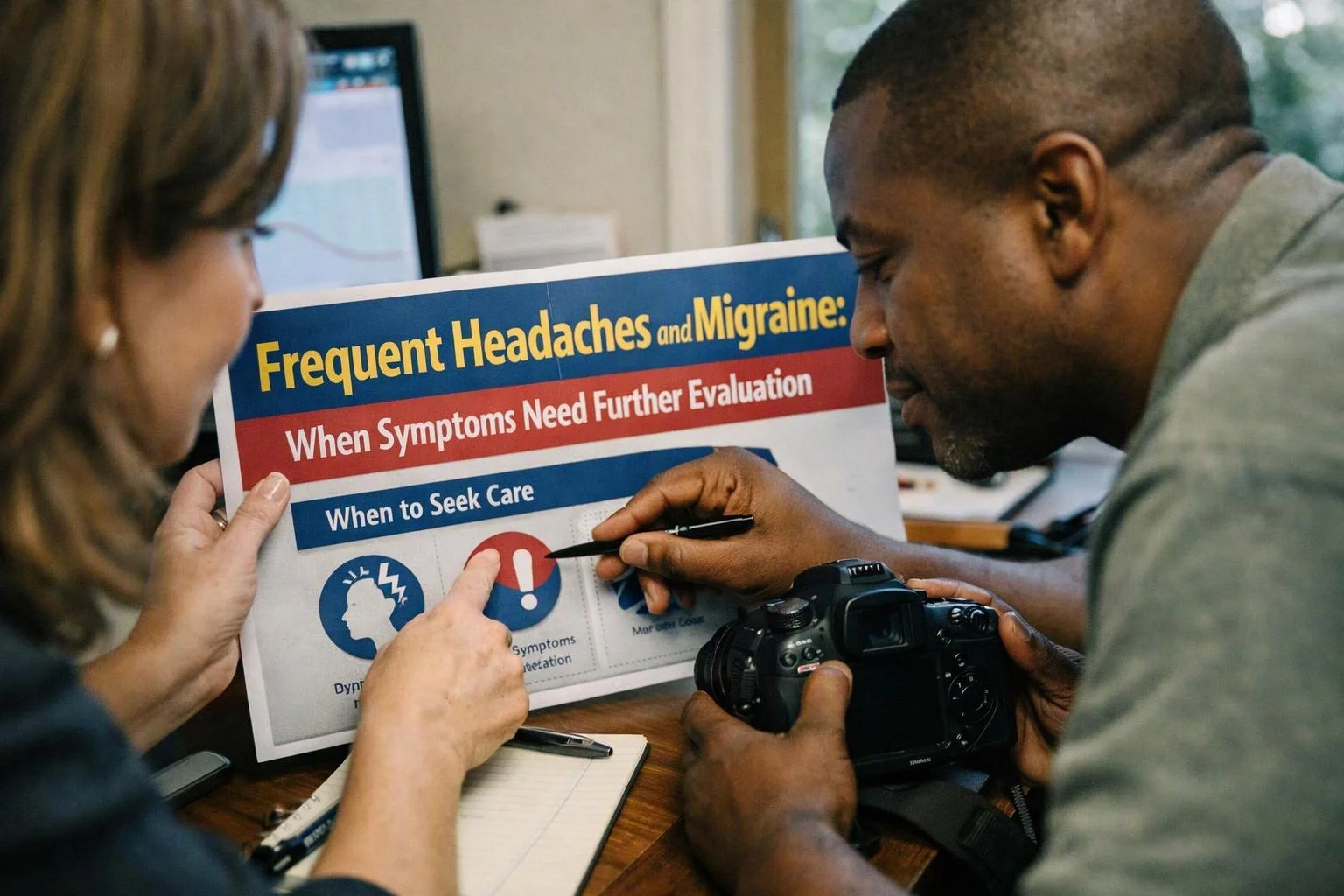
When Should Frequent Headaches Be Evaluated?
Frequent headaches should be evaluated when they become more common, more severe, different from usual, or difficult to control.
A chronic headache can affect work, sleep, mood, and daily activities. We review your headache frequency, headache severity, and changing headache pattern to decide what care may help.
Medical evaluation becomes more important when recurring headaches keep returning without a clear trigger. Our team also checks whether neck pain, medication use, or another pain condition may be contributing.
Our Headache Treatment approach starts with the symptoms you notice and the changes you can describe.
Warning Signs That Need Prompt Medical Attention
Headache red flags can signal a problem that needs prompt medical attention. Seek urgent care when headache pain appears with any of these signs:
These symptoms don't identify the cause by themselves. We use the timing, symptoms, and examination findings to guide the next step.
What Do Migraine Symptoms Feel Like?
Migraine symptoms commonly include moderate or severe head pain with nausea, light sensitivity, sound sensitivity, or visual changes.
A migraine attack may cause throbbing pain on one side or both sides of the head. Movement, bright light, loud sound, stress, or disrupted sleep may make symptoms worse.
Migraine aura is a temporary group of neurologic symptoms that may occur before or during head pain. Aura can include flashing lights, blind spots, tingling, or trouble finding words.
Migraine symptoms vary from person to person. We ask what happens before, during, and after each attack so the pattern is easier to recognize.
Common Causes of Frequent Headaches
Frequent headaches can have several causes, and the right explanation depends on the full symptom pattern. Common causes include:
One person may have more than one headache type. We compare the pain location, quality, timing, and related symptoms before recommending care.
Can Occipital Neuralgia Feel Like a Migraine?
Yes, occipital neuralgia can feel like a migraine because irritated nerves can send sharp pain from the neck into the scalp, forehead, or behind the eye.
The occipital nerves travel from the upper neck into the scalp. Irritation may cause sharp shooting pain, neck pain, or scalp tenderness on one side or both sides.
Referred pain can make nerve pain feel as though it starts near the eye or temple. We check the back of the head, neck movement, scalp sensitivity, and the timing of each pain episode.
Occipital neuralgia and migraine can also occur together. A careful examination helps us choose treatment that matches the source of pain.
Migraine and Occipital Neuralgia: Key Differences
Migraine and occipital neuralgia can overlap, but their pain patterns often differ. The comparison below shows clues we consider during medical evaluation.
| Feature | Migraine | Occipital neuralgia |
|---|---|---|
| Pain location | Often the temple, forehead, or one side of the head | Often the upper neck, back of the scalp, or behind the eye |
| Pain quality | Throbbing or pressure-like pain | Sharp, shooting, burning, or electric-like pain |
| Triggers | Light, sound, stress, missed meals, or sleep changes | Neck movement, pressure on the scalp, or irritation near the nerves |
| Associated symptoms | Nausea, light sensitivity, sound sensitivity, or aura | Neck pain, scalp tenderness, or pain with touch |
These differences are clues, not a diagnosis. We consider both conditions when pain travels from the neck into the head.
Ways to Reduce Common Headache Triggers
Headache triggers can be easier to manage when you track patterns and keep basic routines steady. These prevention steps may help reduce avoidable flare-ups:
A headache diary can show links that are hard to notice during an attack. Bring it to an appointment so we can compare daily habits with symptom changes.
How We Evaluate Chronic Headache and Migraine Symptoms
A pain management physician evaluates chronic headache and migraine symptoms through your medical history, symptom pattern, and neurologic examination.
We ask when the pain began, where it starts, how it feels, and what makes it better or worse. We also review your headache diary, current medicines, past injuries, sleep, hydration, and related symptoms.
Medication review helps us look for medication-overuse headache and possible side effects. We also check for signs that neck pain or occipital nerves may be involved.
Diagnostic testing isn't needed for every headache. We recommend testing when the history or examination suggests that more information is needed.
Our team explains the reason for each recommendation and helps you understand the next step. Premier Injury Specialists focuses on matching the evaluation to the changing headache pattern.
When Headache Treatment May Help
Headache Treatment may help when pain keeps returning, disrupts daily life, or remains difficult to control.
Migraine Treatment may include acute treatment for an active attack and preventive treatment to reduce future episodes. The right plan depends on your symptoms, health history, and medication use.
Chronic Headache Treatment focuses on the pattern that keeps pain going. Occipital Neuralgia Treatment may focus on nerve-related pain that begins in the neck or back of the scalp.
We discuss the benefits, limits, and trade-offs of each option. Our pain management team also adjusts the plan when your symptoms or headache diary show a new pattern.
Questions About Frequent Headaches and Migraine
Can frequent headaches be a sign of another condition?
Yes, frequent headaches can be linked with migraine, medication overuse, neck-related pain, or another condition. Premier Injury Specialists reviews your symptoms and neurologic examination to identify warning signs and guide appropriate care.
How can I tell whether neck pain is causing my headache?
Neck-related headache is more likely when pain begins in the neck or back of the head and changes with neck movement. Scalp tenderness, limited neck motion, or sharp shooting pain can also point toward occipital nerve irritation.
Should I keep a headache diary before an appointment?
Yes, a headache diary can help show when pain starts, what symptoms appear, and which triggers may be involved. Record medicine use, sleep changes, meals, hydration, and activities that affect the pain.
Can taking headache medicine too often cause more headaches?
Yes, frequent use of headache medicine can contribute to medication-overuse headache. We review the medicine, dose pattern, and headache frequency before suggesting a safer treatment plan.
Contact Premier Injury Specialists when changing headaches, migraine symptoms, or nerve-related pain need medical evaluation. We offer Free Consultations to discuss your symptoms and possible next steps.
Get a Free EstimateRelated Resources
Whiplash After a Car Accident: Symptoms and When to Seek Care
What It SolvesOccipital Neuralgia: When Head and Neck Pain May Involve an Occipital Nerve
What It SolvesHeadache After a Head Injury: Symptoms That Need Evaluation
What It SolvesBest Auto Accident Injury Evaluation Options for Urgent, Budget & Long-Term Projects in Stockbridge