
What Is Medication Reconciliation?
Medication Reconciliation is a structured review that compares the medicines you take with your medical records. The review includes prescription drugs, over-the-counter products, supplements, and known allergies. A clinician checks for differences, records the current list, and clarifies changes with you or other members of your care team.
Quick Facts About Medication Reconciliation
Category
Medication safety process
Used for
Keeping medication records current
Common confusion
Not the same as prescribing
Also called
Medicine review, Med Rec
Often discussed with
Medication Management
Key Takeaways About Medication Reconciliation
- It compares your reported medicines with existing care records.
- The review includes prescriptions, over-the-counter products, and supplements.
- Medication reconciliation isn't the same as starting a new medicine.
How Medication Reconciliation Works
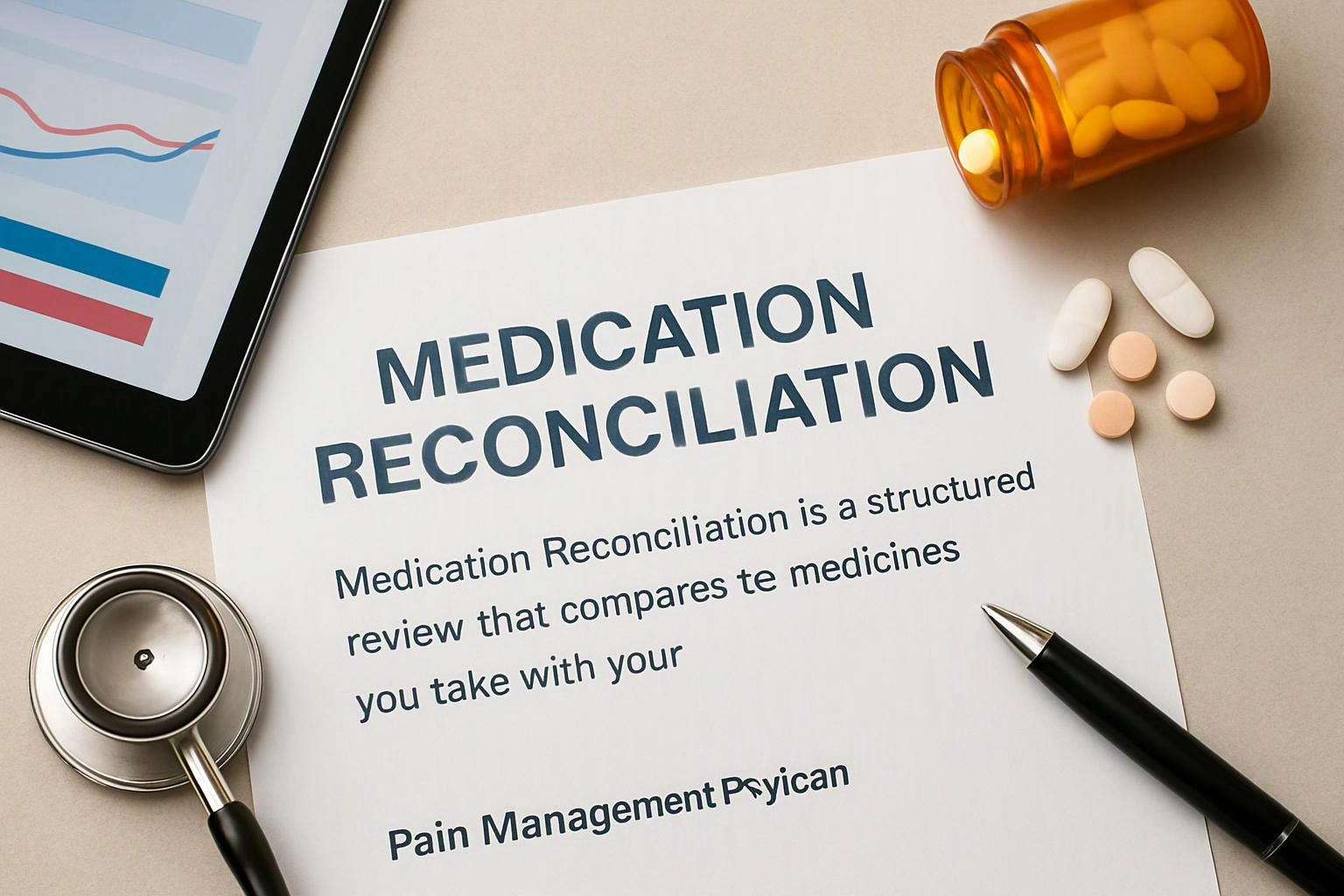
Medication Reconciliation starts with a current list of everything you take. A clinician compares that list with the medical record, pharmacy information, and recent care instructions. The review may find a missing medicine, an outdated dose, or a product that you no longer use.
Related glossary terms: Opioid Agreement, Steroid Taper, Consent Form.
The clinician then asks about changes, allergies, and how each medicine is taken. The care team updates the record and notes which medicines should continue, stop, or receive further review. This process supports clear communication when care moves between offices, hospitals, pharmacies, or specialists.
What the Review Covers
- Prescription medicines and refill changes.
- Over-the-counter products and supplements.
- Allergies and past medicine reactions.
- Instructions from recent medical visits.

From the Premier Injury Specialists team
When we review your medication list, we ask what you currently take and how you take it. We compare that information with the available chart and treatment records. Our team also documents changes, allergies, and products that may affect pain care.
Medication Reconciliation in Practice: A Real-World Example
A patient arrives for Medication Management after another clinician changes a pain medicine. The team reviews the old and new lists, checks other medicines and supplements, and records the current plan for the care team.
Related Services
Related Terms
Opioid Agreement
An Opioid Agreement is a written plan between a patient and a healthcare provider for opioid…
Steroid Taper
A steroid taper is a planned reduction in the dose of a corticosteroid medicine over time…
Consent Form
Consent Form is a written record that shows a person agrees to a service, examination, procedure…
Premier Injury Specialists
Have Questions About Medication Reconciliation?
Contact Premier Injury Specialists for practical guidance on Medication Reconciliation and related pain management physician work in Forest Park.