
What Is Cauda Equina Syndrome?
Cauda Equina Syndrome is a serious condition caused by pressure on the bundle of nerves at the lower end of the spinal cord. The pressure can affect bladder or bowel control, feeling in the inner thighs, and leg strength. A large herniated disc is one possible cause, and the condition needs prompt medical assessment.
Quick Facts About Cauda Equina Syndrome
Category
Lower spinal nerve disorder
Used for
Recognizing severe nerve compression
Common confusion
Often confused with routine sciatica
Also called
Cauda equina compression, CES
Often discussed with
Herniated Disc Treatment
Key Takeaways About Cauda Equina Syndrome
- It affects several lower spinal nerves together.
- Bladder, bowel, groin sensation, or leg changes can signal concern.
- It isn't the same as ordinary sciatica.
How Cauda Equina Syndrome Works
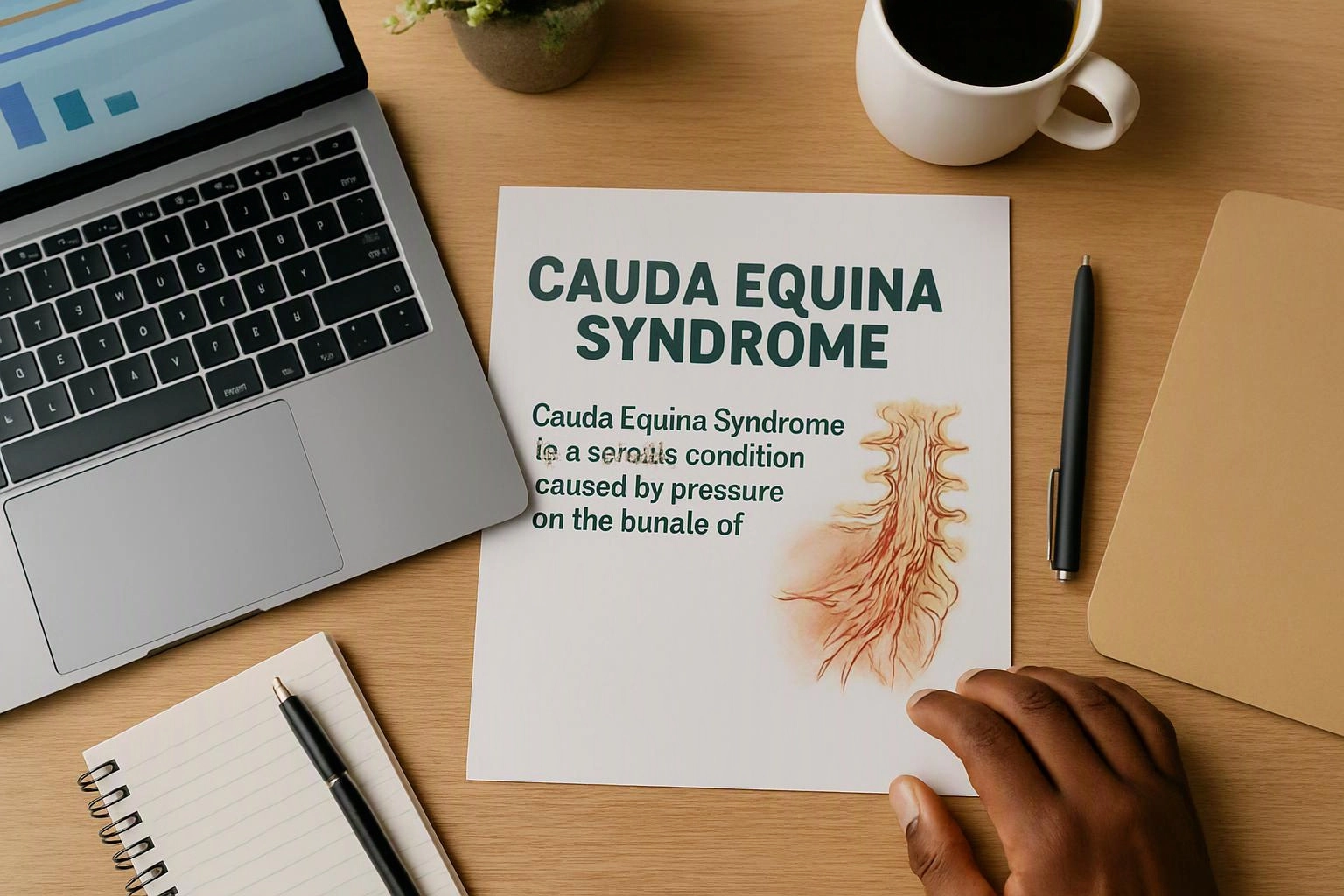
Cauda Equina Syndrome develops when pressure affects the nerve roots below the spinal cord. These nerves help control the legs, pelvic organs, and sensation around the groin. A herniated disc can press on several nerve roots at once.
Related glossary terms: Lumbar Radiculopathy, Radicular Pain, Spinal Stenosis.
Doctors assess the pattern of symptoms and perform a focused nerve examination. Magnetic resonance imaging can show whether a disc or another structure is pressing on the nerves. Changes in bladder or bowel control, groin feeling, or leg strength have more concern than pain alone.
Routine lumbar radiculopathy usually affects one nerve root and often causes pain, tingling, or weakness along one leg. Cauda Equina Syndrome involves a wider group of nerves, so the symptoms can reach both legs or pelvic areas.
From the Premier Injury Specialists team
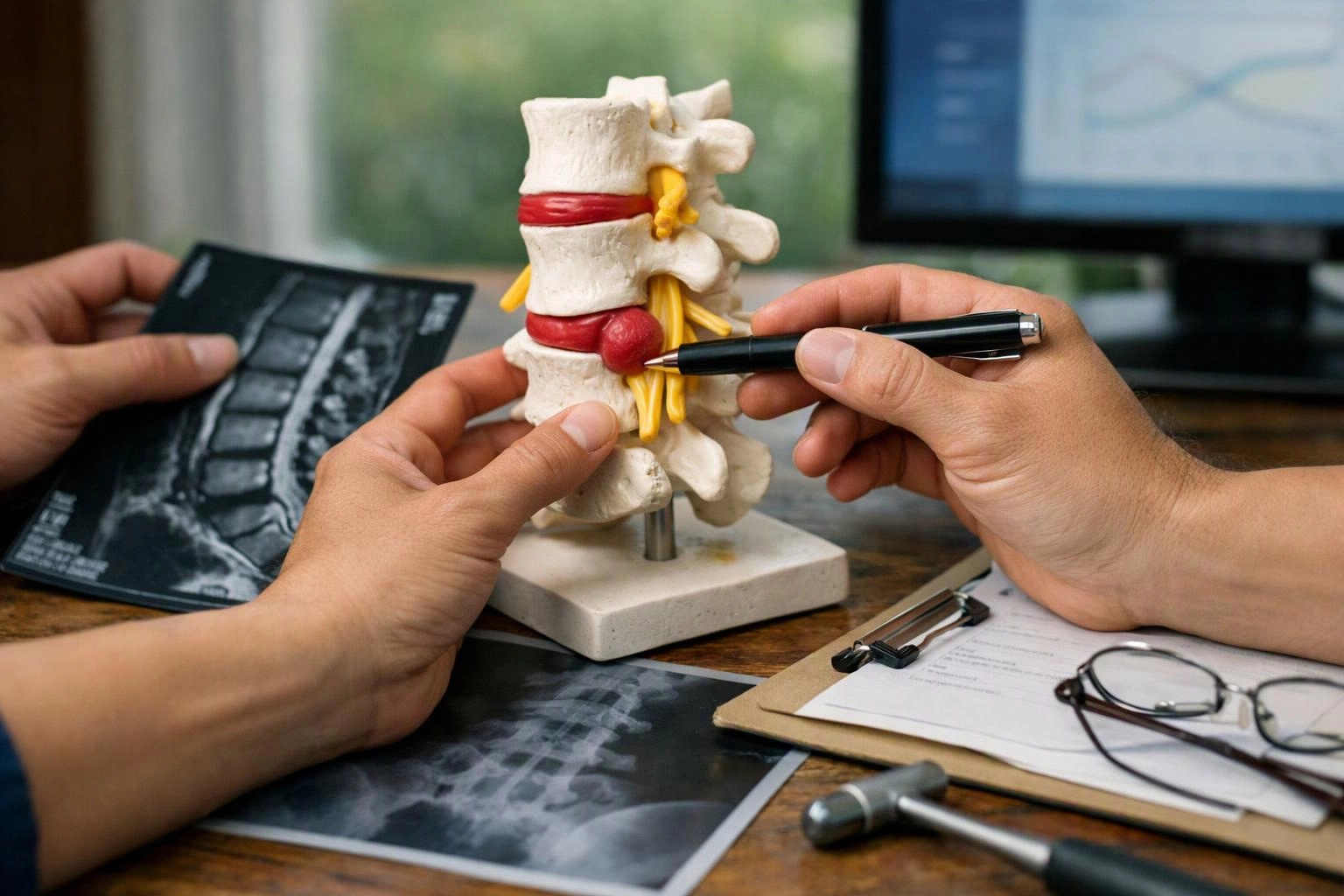
When we evaluate a herniated disc, we ask about bladder and bowel changes, groin sensation, and leg weakness. We review the neurological findings and imaging together, then document whether the pattern suggests ordinary nerve irritation or broader compression that needs urgent medical review.
Cauda Equina Syndrome in Practice: A Real-World Example
A person with a large lumbar disc herniation may develop back pain, numbness near the groin, and new trouble controlling urination. That combination raises concern for Cauda Equina Syndrome and calls for prompt medical assessment.
Related Services
Related Terms
Lumbar Radiculopathy
Lumbar Radiculopathy is a nerve root problem in the lower spine that can cause pain, tingling…
Radicular Pain
Radicular Pain is pain caused by irritation or pressure on a spinal nerve root. The pain…
Spinal Stenosis
Spinal Stenosis is a narrowing of the spaces within the spine that can reduce room for…
Premier Injury Specialists
Have Questions About Cauda Equina Syndrome?
Contact Premier Injury Specialists for practical guidance on Cauda Equina Syndrome and related pain management physician work in Forest Park.