Car Accident Injury Evaluation and Imaging Referrals: When Are Both Needed?
You may need both a car accident injury evaluation and imaging when symptoms, exam findings, or the crash history suggest an injury that imaging can clarify. Premier Injury Specialists reviews those factors first and refers you for appropriate imaging when needed.
Request an Estimate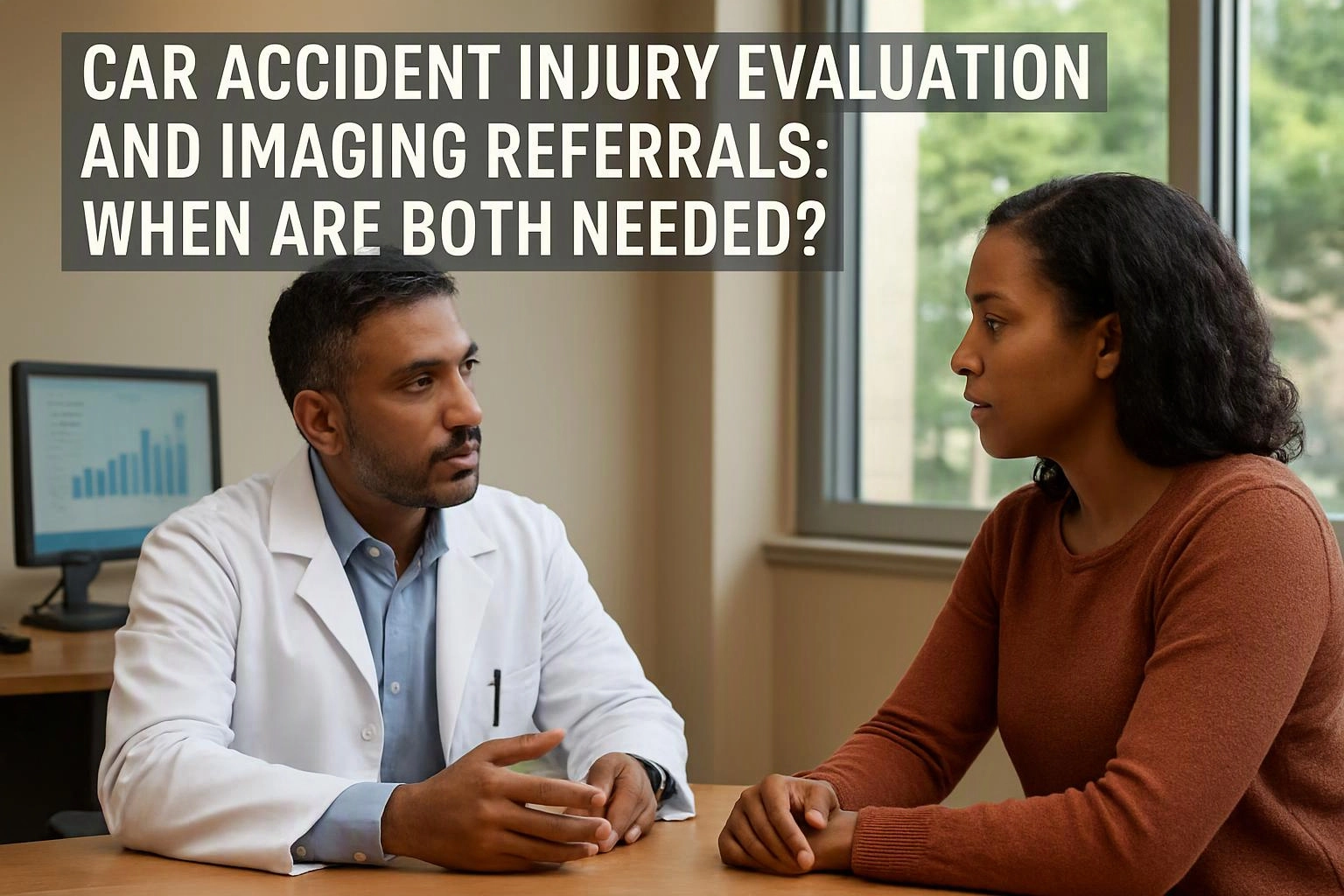
Does Everyone Need Imaging After a Car Accident?
Car accident injury evaluation determines whether imaging could clarify an injury, so not everyone needs imaging after a crash.
We review your medical history and complete a physical examination before making an imaging referral. The evaluation may be enough when symptoms are mild and the findings do not suggest a hidden injury.
When Do an Injury Evaluation and Imaging Work Together?
Both services may be needed when symptoms or examination findings point to an injury that imaging can assess. Our team connects the clinical findings with the right diagnostic test.
The choice depends on your symptoms, examination, and mechanism of injury. We use those details to decide whether an X-ray, MRI, or CT scan may add useful information.
What Does the Injury Evaluation Check First?
An injury evaluation checks pain location, movement, tenderness, neurological symptoms, and the force of the crash. We also review prior injuries because earlier problems can affect current symptoms and treatment decisions.
Our pain management physician asks when symptoms began and how they have changed. The physical examination may include a range of motion assessment, strength checks, and a neurological check for numbness or weakness.
A neck injury, back injury, head injury, or musculoskeletal injury can present in different ways. We compare your symptoms with the mechanism of injury to decide whether diagnostic imaging is useful.
How Do Evaluation and Imaging Referrals Work Together?
The evaluation guides whether imaging is useful, while imaging can add detail that supports the next care decision. Our team uses both sources of information to shape follow-up care.
Cost drivers can include the type of imaging, the body area examined, and the need for follow-up review. We explain what the evaluation includes and how to request an exact quote for services that apply.
What Happens During the Evaluation and Referral Process?
The evaluation and referral process links your symptoms to a clear next care decision. We keep each step focused on finding useful diagnostic information.
Our team also explains what the referral is meant to assess. That purpose helps keep the next step clear and relevant to your care.
When Should You Seek Prompt Medical Attention?
Prompt medical attention is important when serious symptoms appear after a car accident. Seek urgent care for a severe headache, loss of consciousness, weakness, numbness, or confusion.
Loss of bladder or bowel control also needs prompt medical attention. These warning signs can point to a serious head, spine, or neurological problem that needs fast assessment.
We can evaluate ongoing injury symptoms, but severe warning signs may require emergency care first. After urgent concerns are addressed, our team can help with appropriate follow-up care.
How Can You Prepare for a Car Accident Injury Evaluation?
Preparation helps our team understand what happened and how your symptoms have changed. Bring clear crash details, a symptom timeline, and relevant medical records.
A medication list helps us review your current care safely. Tell us about previous injuries, even if they affected a different body area.
Write down changes in pain, swelling, movement, numbness, weakness, or concussion symptoms. These details help connect your history with the physical examination and any imaging referral.
Questions About Car Accident Evaluations and Imaging
Can an injury evaluation show whether I need an MRI after a car accident?
Premier Injury Specialists can use your symptoms and examination findings to decide whether an MRI referral may add useful information. The decision also considers the suspected injury and how symptoms are changing.
What symptoms may lead to an imaging referral after a crash?
Neck pain, back pain, persistent swelling, limited range of motion, numbness, weakness, and worsening headaches may support an imaging referral. The physical examination and crash history help determine which test may be useful.
Can imaging miss a soft tissue injury after a car accident?
Imaging can provide important details, but some soft tissue injuries may not appear clearly on every test. We compare imaging results with your symptoms and physical examination during follow-up care.
What should I bring to a car accident injury evaluation?
Bring crash details, a symptom timeline, medical records, your medication list, and information about previous injuries. These details help our team complete a focused injury assessment.
Schedule Your Car Accident Injury Evaluation
Premier Injury Specialists reviews your symptoms, examination findings, and crash history to guide the next step. Contact our team to discuss an evaluation and any needed imaging referral.
Contact Premier Injury SpecialistsRelated Resources
Auto Accident Injury Evaluation Companies Worth Comparing in Stockbridge (2026)
Brand vs BrandPremier Injury Specialists vs Local Auto Accident Injury Evaluation Alternatives in Stockbridge: Side-by-Side Comparison
What It SolvesWhiplash After a Car Accident: Symptoms and When to Seek Care
What It SolvesHeadache After a Head Injury: Symptoms That Need Evaluation