
What Is the Sympathetic Nervous System?
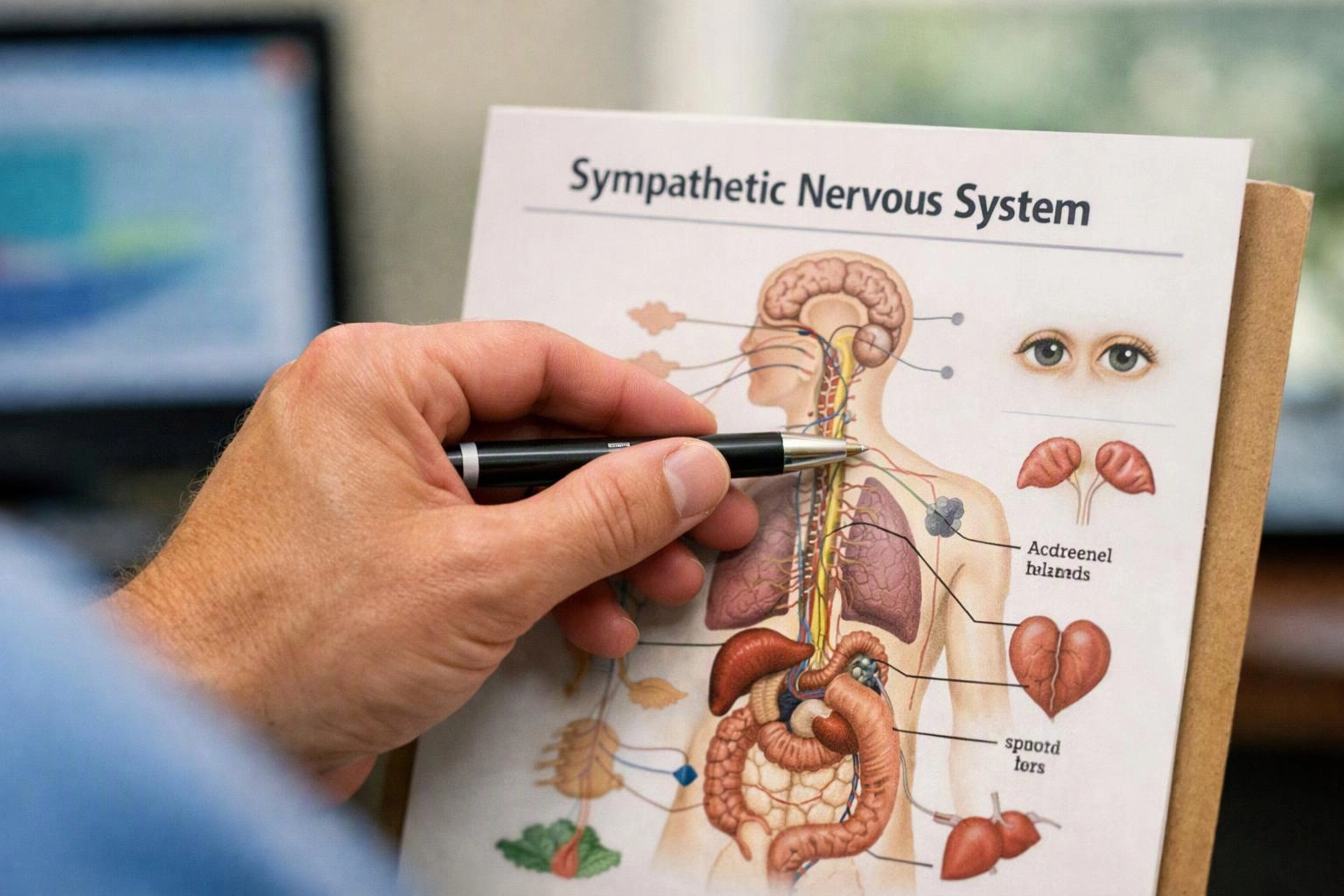
The sympathetic nervous system is a part of the autonomic nervous system that prepares the body for action. It can raise alertness, change blood flow, increase heart activity, and affect sweating. In pain care, abnormal sympathetic signals may help maintain certain pain conditions, including complex regional pain syndrome.
Quick Facts About Sympathetic Nervous System
Category
Part of the autonomic nervous system
Used for
Assessing sympathetic pain signals
Common confusion
It is not the same as voluntary muscle control
Also called
SNS, Sympathetic division
Often discussed with
Sympathetic Nerve Block, Stellate Ganglion Block
Key Takeaways About Sympathetic Nervous System
- It controls automatic responses linked to alertness and body protection.
- Its nerve signals can affect blood flow and pain.
- It is not the same as the sensory nervous system.
How Sympathetic Nervous System Works

The sympathetic nervous system sends automatic signals that help the body respond to stress or activity. These signals can change heart activity, sweating, blood vessel tone, and blood flow. The body makes these changes without conscious control.
Related glossary terms: Neuropathic Pain, Peripheral Neuropathy, Pain Scale.
In pain care, doctors may look for signs that sympathetic activity contributes to ongoing pain. A sympathetic nerve block places medicine near a group of sympathetic nerves. The response can help show whether those nerves play a role in the pain pattern. A stellate ganglion block is one example used near sympathetic nerves in the neck.
Sympathetic nerve signals can affect pain without being the only cause. A full assessment also considers the pain location, symptoms, physical findings, and health history.
From the Premier Injury Specialists team
When we assess sympathetic nerve activity, we review the pain pattern, skin changes, temperature differences, and other exam findings. We also compare those findings with the health history before considering a sympathetic nerve block. Our team uses the response as one clinical clue, not as a stand-alone diagnosis.
Sympathetic Nervous System in Practice: A Real-World Example
A person with complex regional pain syndrome may have burning pain, unusual sweating, or a temperature change in one limb. During care at Premier Injury Specialists, a sympathetic nerve block may help assess whether sympathetic signals contribute to that pain.
Related Services
Related Terms
Neuropathic Pain
Neuropathic Pain is pain caused by damaged, irritated, or poorly functioning nerves. The pain may feel…
Peripheral Neuropathy
Peripheral Neuropathy is a nerve disorder that affects nerves outside the brain and spinal cord. These…
Pain Scale
A pain scale is a tool that helps you describe how strong your pain feels. It…
Premier Injury Specialists
Have Questions About Sympathetic Nervous System?
Contact Premier Injury Specialists for practical guidance on Sympathetic Nervous System and related pain management physician work in Stockbridge.