
What Is a Nerve Conduction Study?
A Nerve Conduction Study is a test that checks how well electrical signals travel through peripheral nerves. Small electrodes record the signal after a mild electrical pulse reaches the nerve. The results can show slowed or weakened nerve function, which may support evaluation of symptoms such as numbness, tingling, burning, or weakness.
Quick Facts About Nerve Conduction Study
Category
Diagnostic nerve test
Used for
Peripheral nerve function
Common confusion
Not the same as an MRI
Also called
NCS, Nerve Conduction Test
Often discussed with
Diabetic Neuropathy Treatment, Neuropathy Treatment
Key Takeaways About Nerve Conduction Study
- The test measures nerve signals, not blood sugar.
- Electrodes record signal speed and strength.
- It differs from a needle muscle test.
How Nerve Conduction Study Works
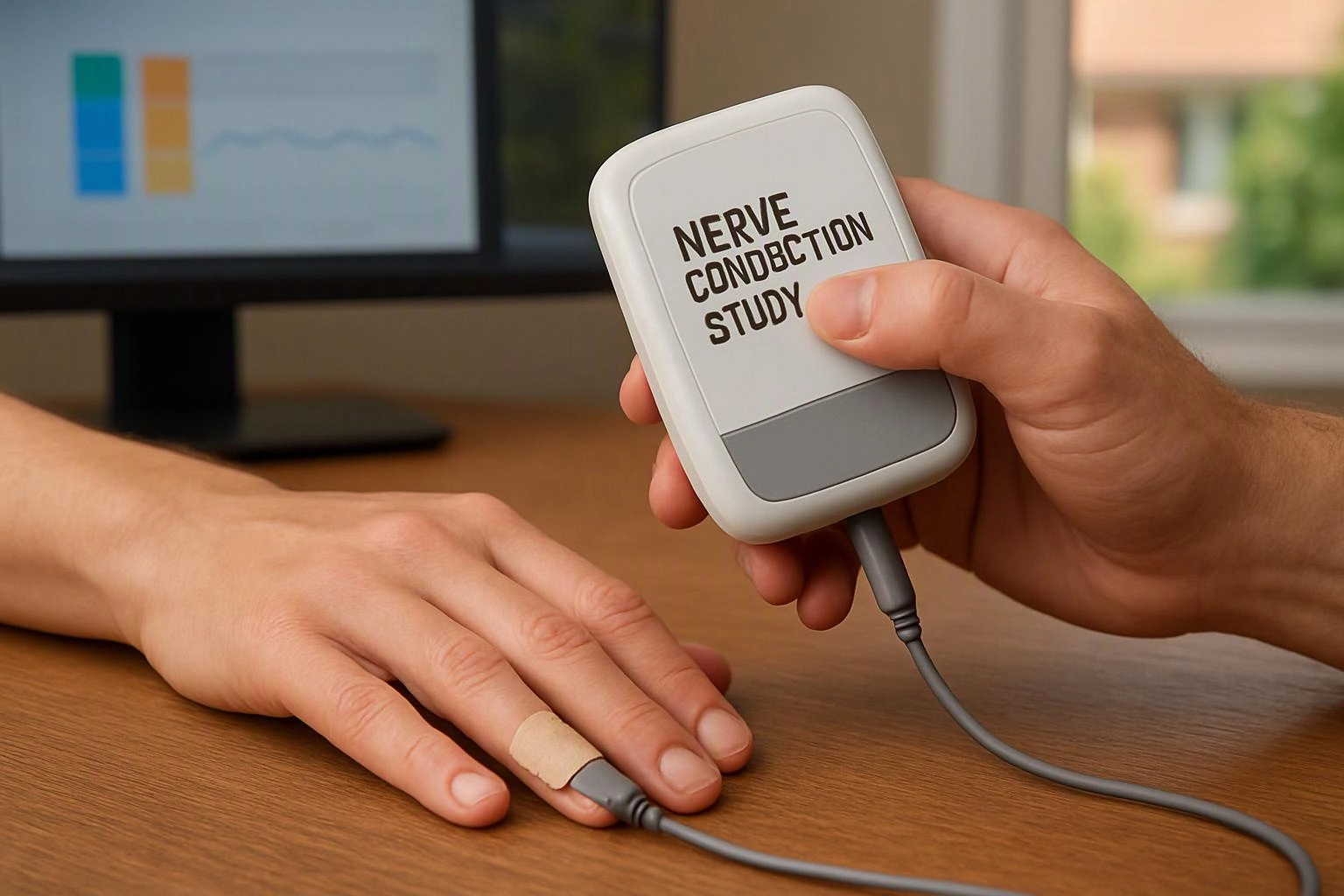
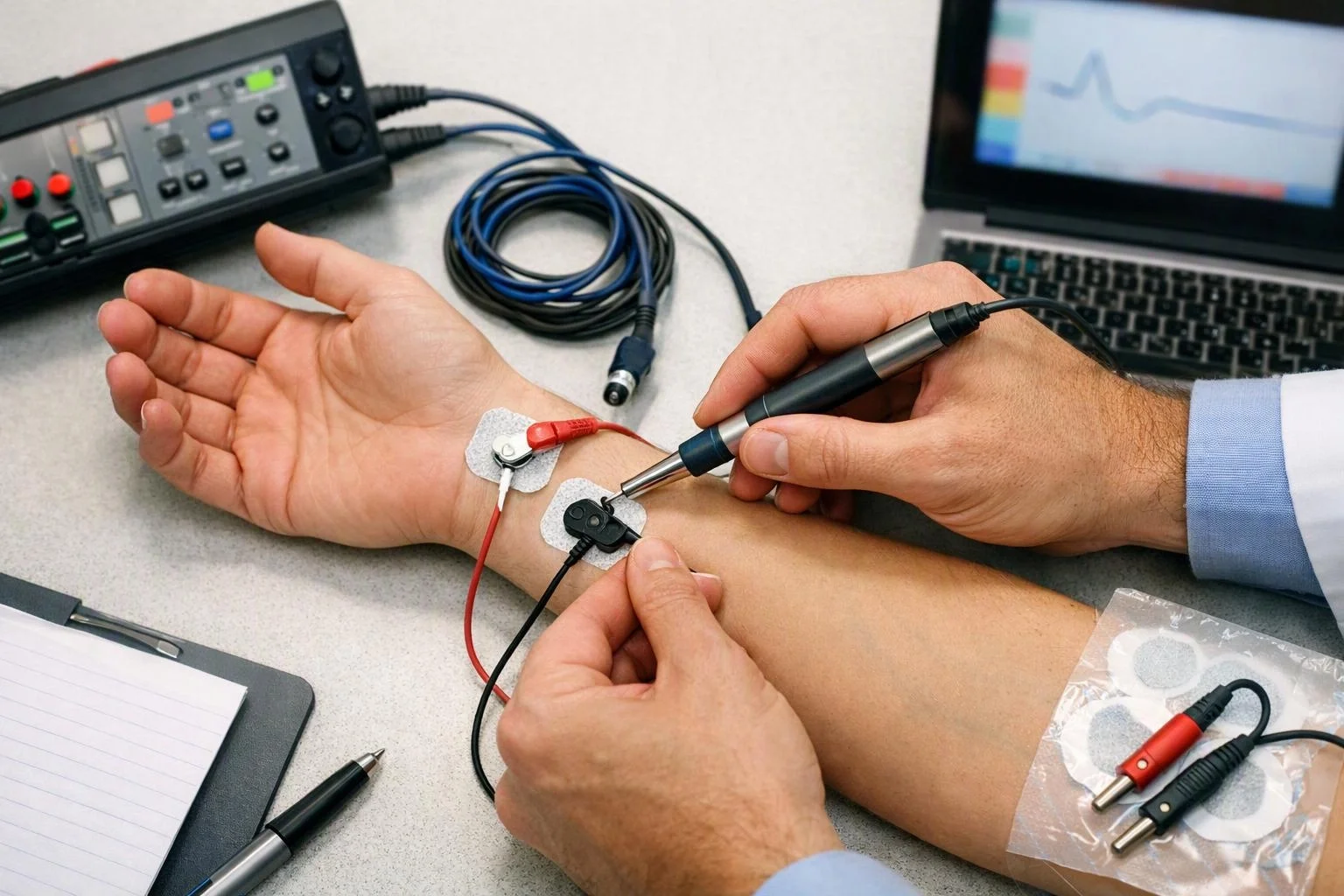
A Nerve Conduction Study uses skin electrodes to track electrical signals along a nerve. A testing device sends a mild pulse, and the electrodes record how quickly and strongly the signal travels. The results help show whether a nerve carries signals normally.
Related glossary terms: Peripheral Neuropathy, Neuropathic Pain, Paresthesia.
Slower or weaker signals may point to nerve damage or pressure. In diabetic neuropathy care, the findings add objective information to your symptoms and physical exam. The study checks nerve function in the limbs, but it does not measure blood sugar or show the body's soft tissues.
Related test
Electromyography checks electrical activity in muscles. A clinician may consider both tests when nerve and muscle symptoms overlap.
From the Premier Injury Specialists team
When we review a Nerve Conduction Study, we compare the findings with symptoms, sensation changes, and the physical exam. Our team looks for patterns that fit diabetic neuropathy and records other possible causes that may need attention.
Nerve Conduction Study in Practice: A Real-World Example
A person with diabetes reports burning feet and numb toes. A Nerve Conduction Study can show whether nerve signals in the legs are slowed or weakened, which helps guide the diabetic neuropathy evaluation.
Related Services
Related Terms
Peripheral Neuropathy
Peripheral Neuropathy is a nerve disorder that affects nerves outside the brain and spinal cord. These…
Neuropathic Pain
Neuropathic Pain is pain caused by damaged, irritated, or poorly functioning nerves. The pain may feel…
Paresthesia
Paresthesia is an unusual skin sensation that may feel like tingling, prickling, burning, or numbness. The…
Nerve Root
A nerve root is a bundle of nerve fibers that leaves the spinal cord through an…
Premier Injury Specialists
Have Questions About Nerve Conduction Study?
Contact Premier Injury Specialists for practical guidance on Nerve Conduction Study and related pain management physician work in Stockbridge.