
What Is a Muscle Spasm?
A Muscle Spasm is an involuntary tightening of a muscle that can cause pain, stiffness, or limited movement. The tightening may affect a small area, such as a neck muscle, or a larger muscle group in the back or leg. Muscle spasms may follow strain, irritation, poor posture, or other painful conditions.
Quick Facts About Muscle Spasm
Category
Muscle movement problem
Used for
Describing painful muscle tightness
Common confusion
A spasm is not simple muscle soreness
Also called
Muscle Cramp, Muscle contraction
Often discussed with
Trigger Point Injection
Key Takeaways About Muscle Spasm
- A spasm involves involuntary muscle tightening.
- Pain may come from the muscle or nearby irritated tissue.
- A spasm is not the same as ordinary muscle soreness.
How Muscle Spasm Works
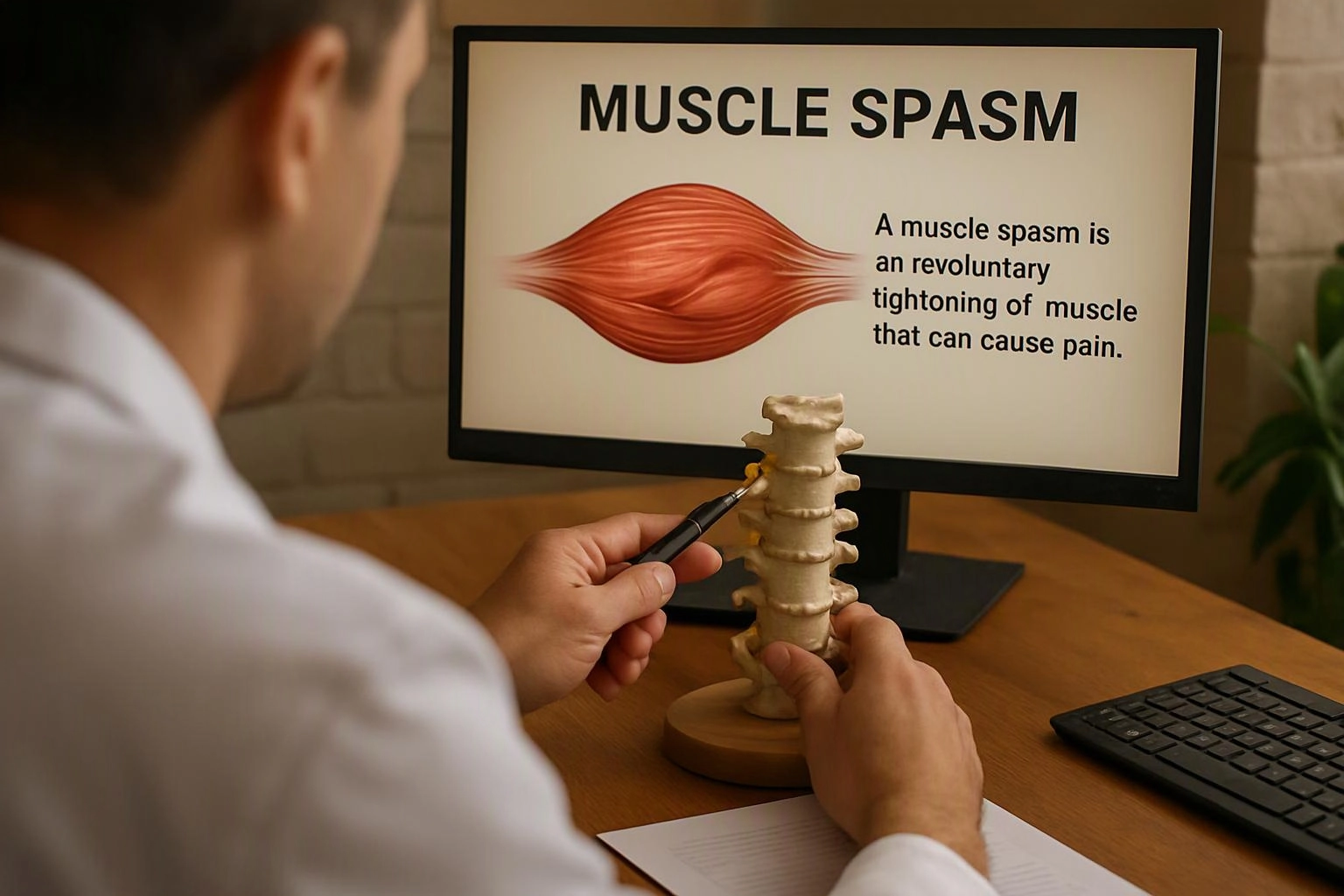
Muscle spasm happens when muscle fibers tighten without a person choosing to contract them. The area may feel hard, cramped, tender, or difficult to move. Some spasms stop quickly, while others keep the muscle tense and create a sore spot.
Related glossary terms: Acute Pain, Inflammation.
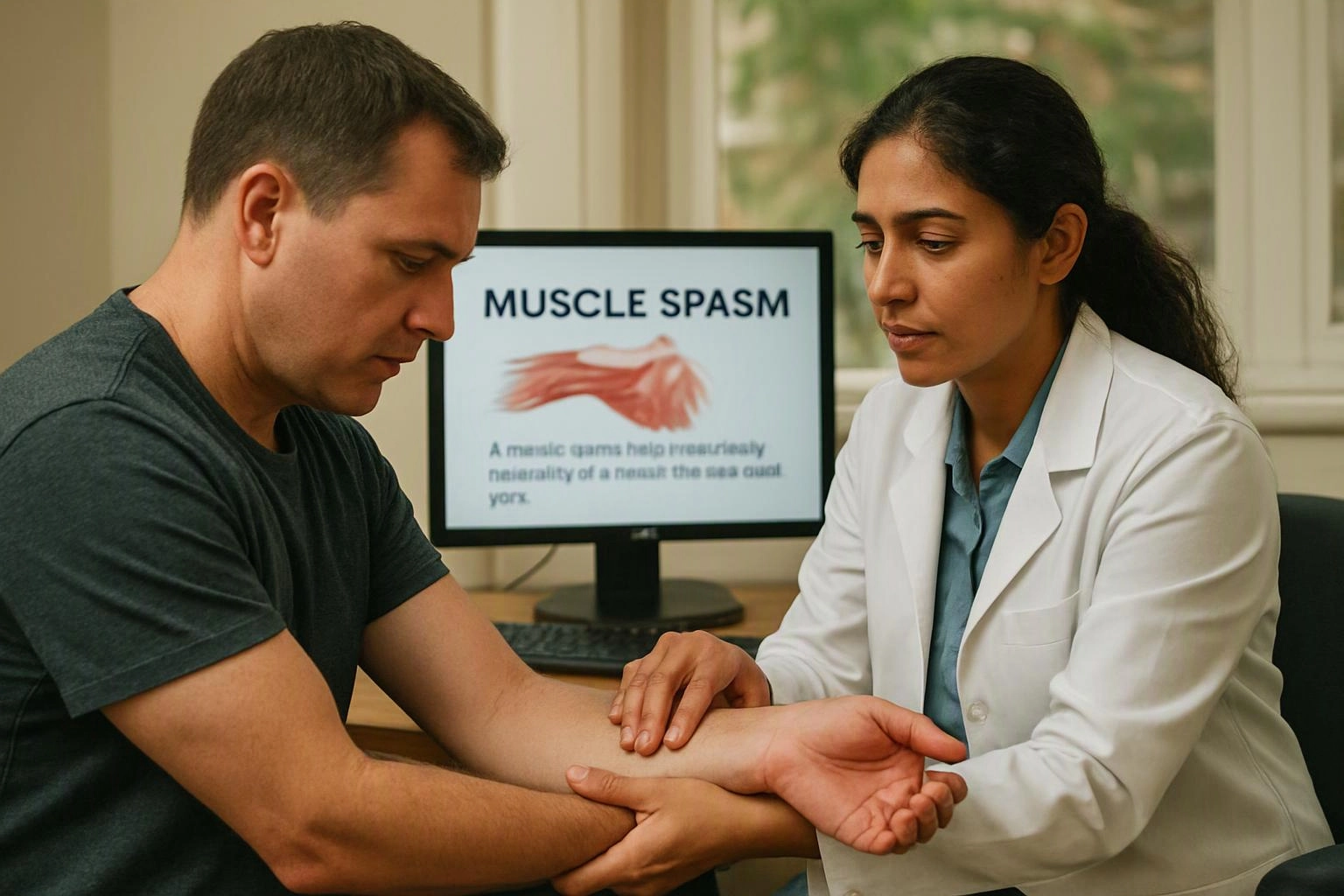
A clinician checks the painful area by asking about symptoms and watching movement. Gentle pressure may show a tight band or a tender point inside the muscle. A trigger point injection targets a painful muscle spot with medication intended to reduce local pain and irritation. The injection does not treat every cause of muscle tightness.
From the Premier Injury Specialists team
When we assess a muscle spasm, we check the location, movement pattern, tenderness, and nearby nerves or joints. We also ask what started the pain and whether the tight area matches the reported symptoms. For a trigger point injection, our team uses this exam to identify whether a focused muscle treatment fits the problem.
Muscle Spasm in Practice: A Real-World Example
After a rear-end collision, a person may develop a painful neck muscle spasm that makes turning the head difficult. A clinician may find a tender, tight area and consider a trigger point injection when the findings match the reported pain.
Related Services
Related Terms
Acute Pain
Acute Pain is a short-term pain response that usually begins after an injury, illness, procedure, or…
Inflammation
Inflammation is the body’s response to irritation, injury, or disease. It involves changes in nearby tissues…
Premier Injury Specialists
Have Questions About Muscle Spasm?
Contact Premier Injury Specialists for practical guidance on Muscle Spasm and related pain management physician work in Stockbridge.