
What Is Hyperalgesia?
Hyperalgesia is an increased pain response to a stimulus that normally causes pain. The nervous system becomes more sensitive, so pressure, heat, or injury may feel more painful than expected. Hyperalgesia can occur with nerve irritation, inflammation, or ongoing pain and may appear with neuropathy or other pain conditions.
Quick Facts About Hyperalgesia
Category
Pain sensitivity change
Used for
Describing amplified pain
Common confusion
Different from allodynia
Also called
Increased Pain Sensitivity, Pain hypersensitivity
Often discussed with
Neuropathy Treatment
Key Takeaways About Hyperalgesia
- Pain feels stronger than the physical stimulus would suggest.
- Nerve sensitivity can affect how neuropathy symptoms feel.
- Hyperalgesia is not the same as allodynia.
How Hyperalgesia Works
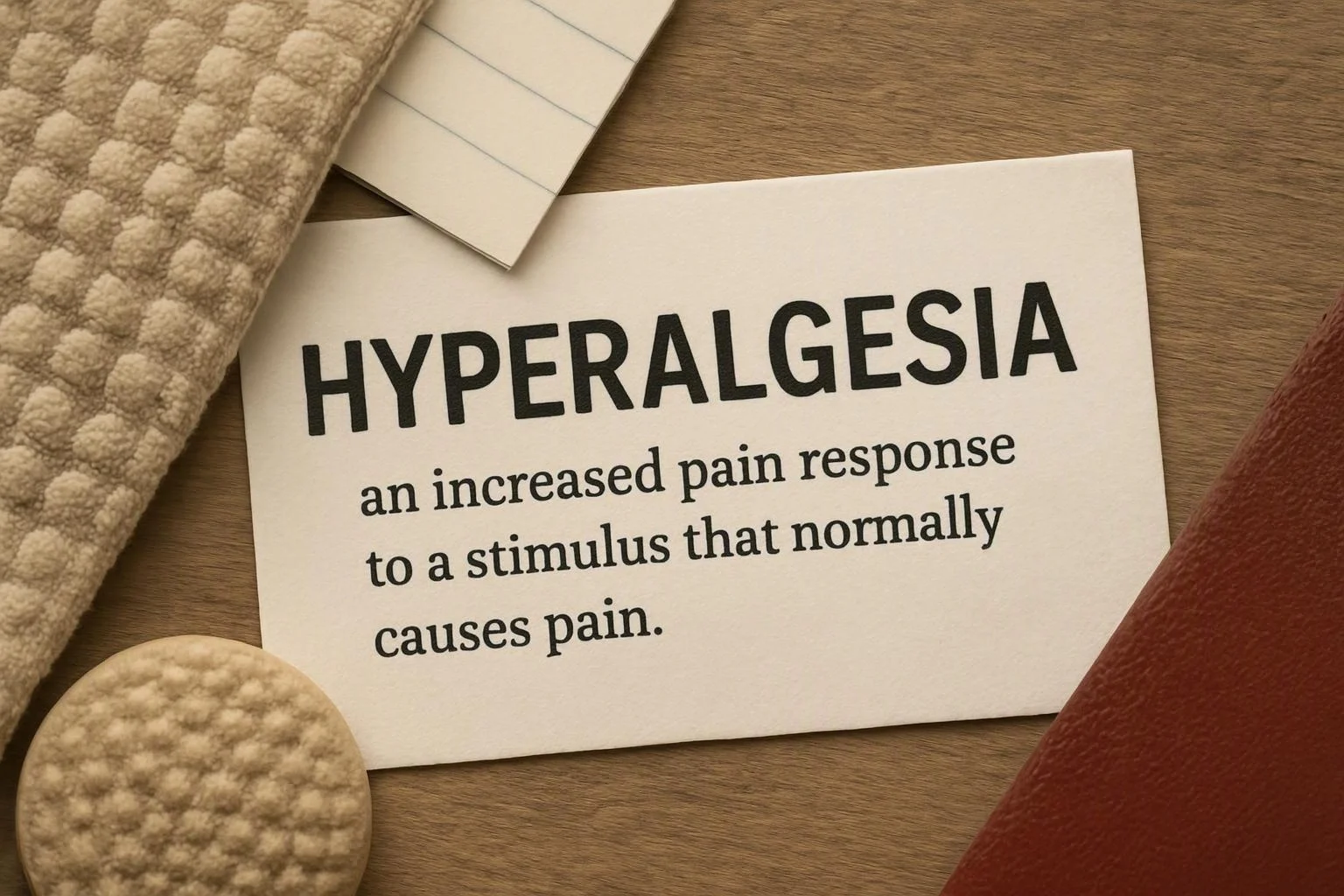
Hyperalgesia works through increased sensitivity in the pain pathways. Nerves may send stronger pain signals after irritation, injury, inflammation, or ongoing pain. The original stimulus still causes pain, but the response becomes unusually intense.
Related glossary terms: Allodynia, Neuropathic Pain, Peripheral Neuropathy.
A clinician may ask what triggers the pain and how the sensation compares with the physical finding. The exam may include light pressure, movement, or a check of sensation. Neuropathy can involve burning, aching, or sharp pain that feels amplified in the affected area.
Hyperalgesia and Related Pain Terms
Allodynia describes pain from a stimulus that normally should not hurt, such as light clothing against the skin. Neuropathic pain comes from nerve damage or nerve irritation and may include hyperalgesia as one feature.

From the Premier Injury Specialists team
When we assess neuropathy symptoms, we ask what causes the pain and whether the response seems stronger than expected. We also compare the reported sensation with the exam findings and the affected nerve pattern. That context helps us separate hyperalgesia from other changes in sensation.
Hyperalgesia in Practice: A Real-World Example
A person with peripheral neuropathy may feel severe burning when a clinician applies light pressure to an already painful area. The pressure causes pain, but the response is much stronger than expected from that contact.
Related Services
Related Terms
Allodynia
Allodynia is a nerve pain condition in which a normally harmless touch or sensation feels painful…
Neuropathic Pain
Neuropathic Pain is pain caused by damaged, irritated, or poorly functioning nerves. The pain may feel…
Peripheral Neuropathy
Peripheral Neuropathy is a nerve disorder that affects nerves outside the brain and spinal cord. These…
Central Sensitization
Central Sensitization is a change in how the brain and spinal cord process pain signals. This…
Premier Injury Specialists
Have Questions About Hyperalgesia?
Contact Premier Injury Specialists for practical guidance on Hyperalgesia and related pain management physician work in Stockbridge.