
What Is Foraminal Stenosis?
Foraminal Stenosis is a narrowing of the openings between spinal bones where nerve roots leave the spine. The narrowing may press on a nerve root and cause pain, numbness, tingling, or weakness along the nerve’s path. It can affect the neck or lower back and may result from aging, bone growth, or disc changes.
Quick Facts About Foraminal Stenosis
Category
Spinal narrowing condition
Used for
Explaining nerve root pressure
Common confusion
Different from central canal stenosis
Also called
Neural Foraminal Narrowing, Neural Foraminal Stenosis
Often discussed with
Spinal Stenosis Treatment, Lumbar Radiculopathy Treatment
Key Takeaways About Foraminal Stenosis
- It affects a nerve exit opening, not the spinal cord itself.
- Symptoms may follow a specific path into an arm or leg.
- It isn't the same as central spinal canal stenosis.
How Foraminal Stenosis Works
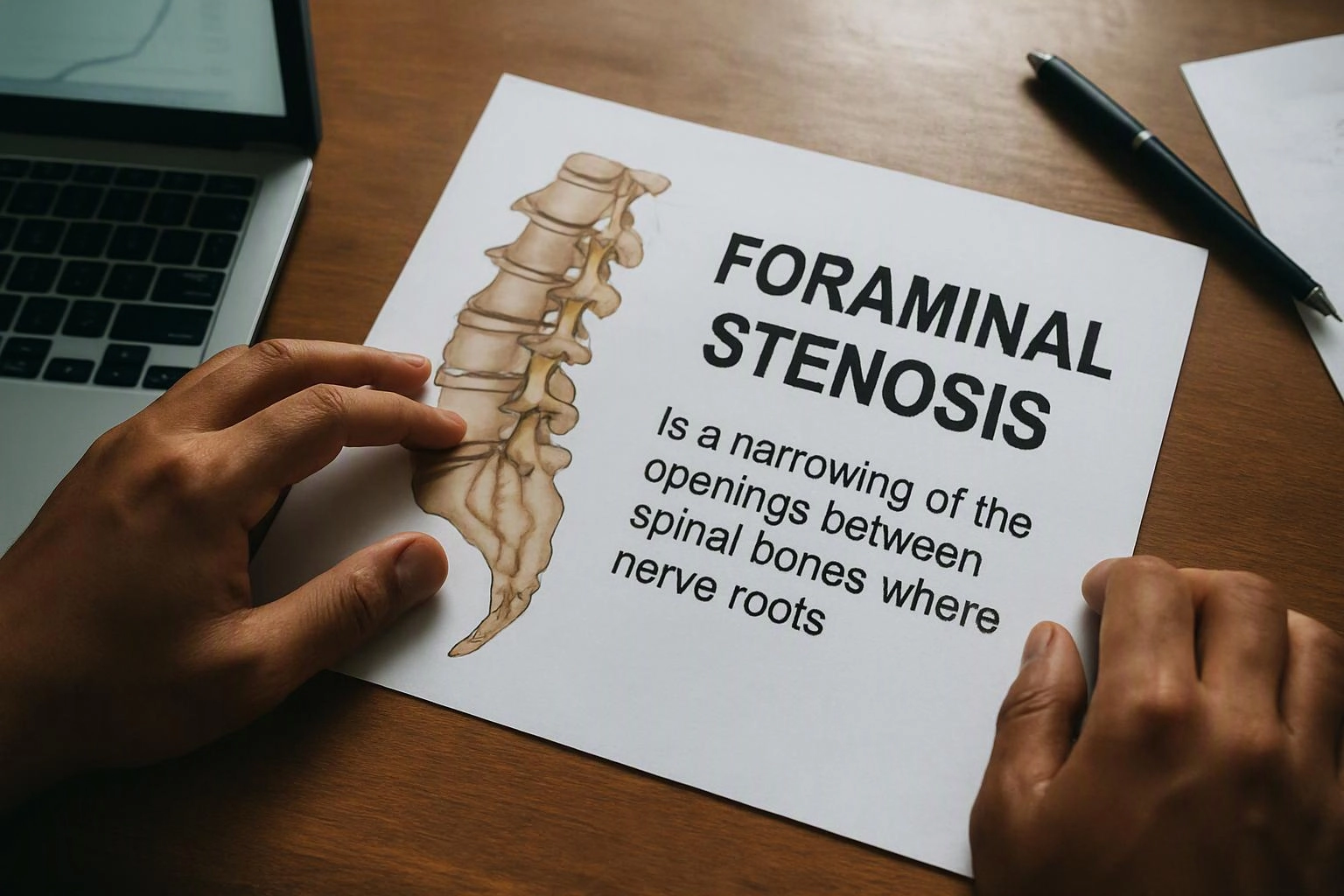
Foraminal Stenosis narrows the passage where a spinal nerve root exits the spine. Disc changes, joint changes, or bone growth can reduce that space. Pressure or irritation may affect how the nerve sends signals.
Related glossary terms: Nerve Root, Lumbar Spine, Radiculitis.
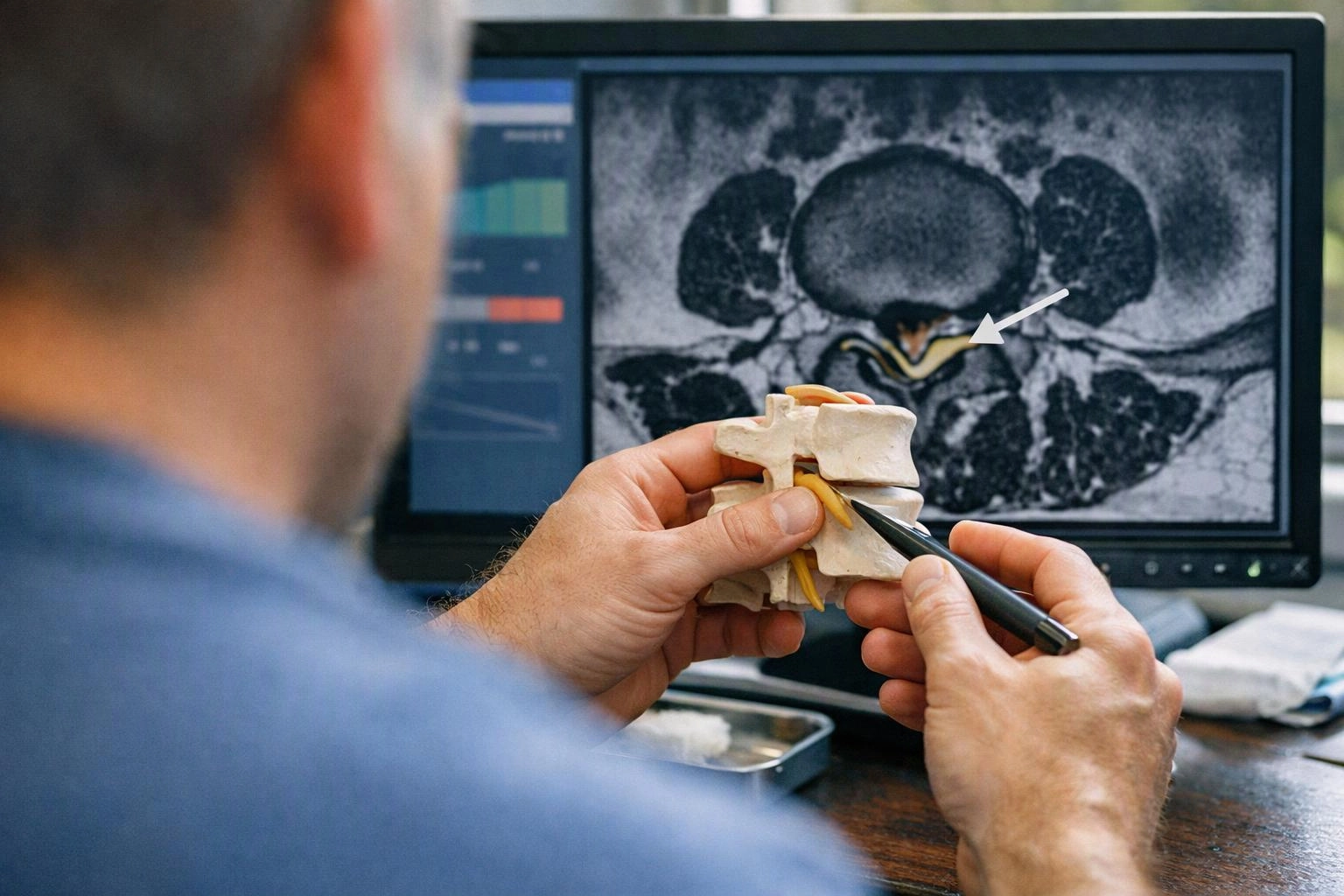
Doctors assess the affected area, the symptom pattern, and imaging findings together. A neck opening may affect an arm, while a lower back opening may affect a leg. The nerve root involved helps explain where pain, tingling, numbness, or weakness appears.
Nerve Root symptoms may change with posture or movement. Foraminal narrowing can appear on imaging without causing symptoms, so the scan must match the person's examination and reported symptoms.
From the Premier Injury Specialists team
When we assess Foraminal Stenosis, we connect imaging findings with the person’s symptoms and physical examination. Our team also tracks which nerve root pattern fits the reported pain or numbness. This helps us discuss Spinal Stenosis Treatment in a focused way.
Foraminal Stenosis in Practice: A Real-World Example
A person with lower back foraminal stenosis may feel sharp pain that travels into the buttock and leg. The pattern may suggest irritation of a lower spinal nerve root, especially when imaging shows narrowing at the same level.
Related Terms
Nerve Root
A nerve root is a bundle of nerve fibers that leaves the spinal cord through an…
Lumbar Spine
The lumbar spine is the lower section of the back, located between the thoracic spine and…
Radiculitis
Radiculitis is inflammation or irritation around a spinal nerve root. The condition can cause sharp, burning…
Premier Injury Specialists
Have Questions About Foraminal Stenosis?
Contact Premier Injury Specialists for practical guidance on Foraminal Stenosis and related pain management physician work in Stockbridge.