
What Is a Cervicogenic Headache?
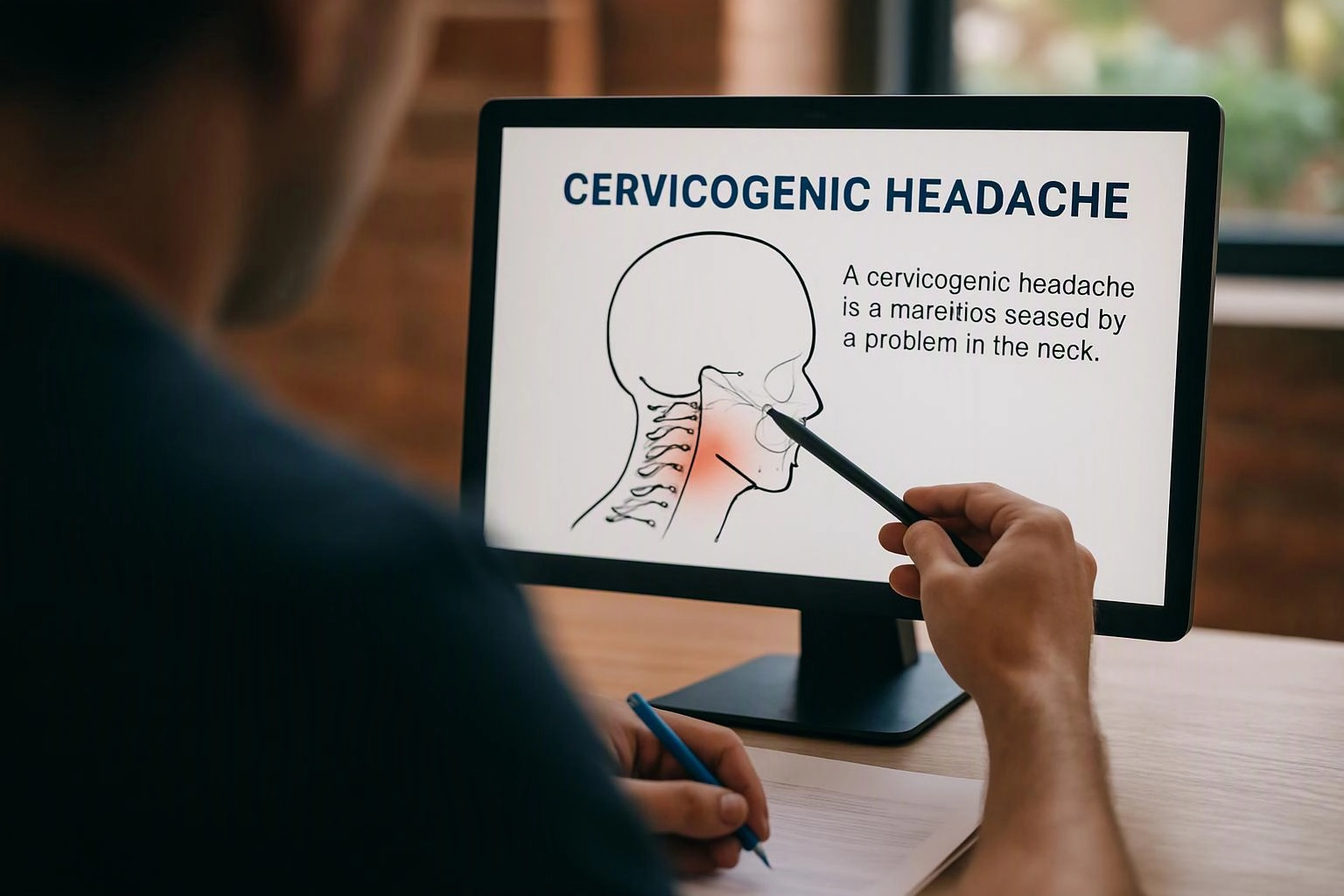
A cervicogenic headache is a headache caused by a problem in the neck, such as irritation in the cervical joints, muscles, or nerves. Pain often starts in the back of the head or neck and spreads toward the forehead, temple, or eye. Neck movement may increase the pain.
Quick Facts About Cervicogenic Headache
Category
Secondary headache disorder
Used for
Linking head pain to neck sources
Common confusion
Often confused with migraine or tension headache
Also called
Neck-Origin Headache, Cervical headache
Often discussed with
Chronic Headache Treatment, Occipital Nerve Blocks
Key Takeaways About Cervicogenic Headache
- Pain begins in the neck and refers into the head.
- Neck movement may worsen the headache.
- A cervicogenic headache is not the same as a migraine.
How Cervicogenic Headache Works
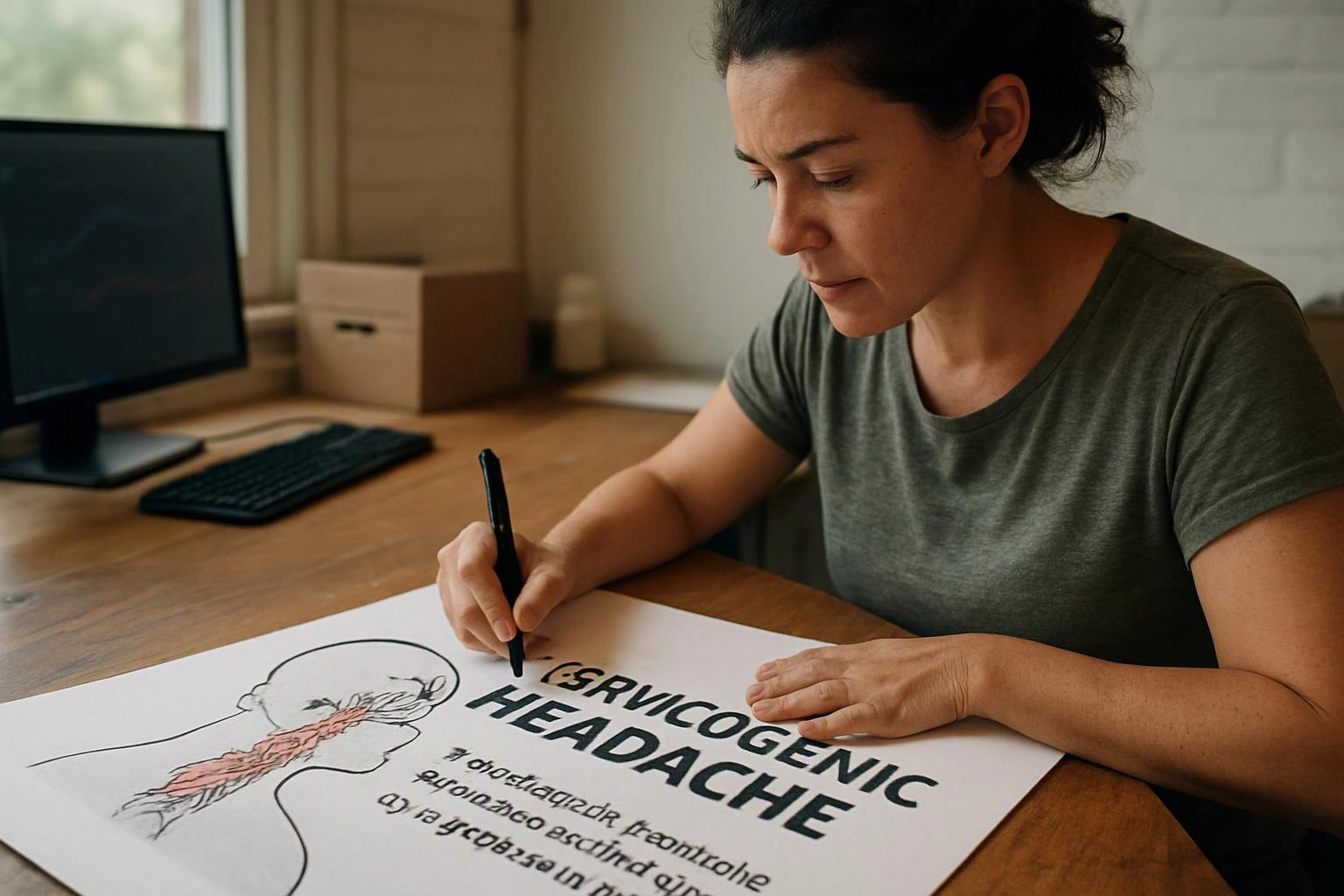
Cervicogenic headache develops when pain signals from the upper neck are felt in the head. Joints, muscles, discs, or nerves in the cervical spine may send these signals. The brain can read the source as pain near the forehead, temple, or eye.
Related glossary terms: Chronic Pain, Tension Headache, Referred Pain.
Neck position and movement can help show the connection. A person may notice reduced neck motion, tenderness, or pain that follows one side of the head. A migraine may include light sensitivity, nausea, or throbbing pain, while a cervicogenic headache usually centers on a neck source.
During chronic headache treatment, clinicians connect the headache pattern with the neck examination and reported triggers. An occipital nerve block may also help identify whether irritated nerves contribute to the pain.
From the Premier Injury Specialists team
When we assess a suspected cervicogenic headache, we review the pain pattern and examine neck movement, tenderness, and related symptoms. Our team also considers whether the headache followed a neck injury or changes with posture. We use these findings to guide chronic headache treatment.
Cervicogenic Headache in Practice: A Real-World Example
A person develops pain at the base of the skull after a neck injury, and the pain spreads behind one eye. Turning the head or holding the neck in one position makes the headache worse.
Related Services
Related Terms
Chronic Pain
Chronic Pain is ongoing or recurring pain that continues beyond the usual healing period for an…
Tension Headache
A Tension Headache is a common headache linked to pressure, tightness, or aching around the forehead…
Referred Pain
Referred Pain is discomfort felt in one body area even though the source lies elsewhere. Shared…
Premier Injury Specialists
Have Questions About Cervicogenic Headache?
Contact Premier Injury Specialists for practical guidance on Cervicogenic Headache and related pain management physician work in Stockbridge.